Stoicism in the Age of Anxiety: How Ancient Wisdom Meets Modern Psychology
INTRODUCTION: THE AGE OF ANXIETY
Painted by Jay Pacheco, July 17, 2023
We live in a time where anxiety is not an exception — it is the norm.
Students feel it.
Parents feel it.
Leaders feel it.
Police officers feel it.
Therapists feel it while helping others manage it.
Even children feel the weight of expectation and overstimulation.
You are feeling it!
But here is the truth:
Anxiety is not the enemy.
“We suffer more often in imagination than in reality.” — Seneca
It is a biological signal. A messenger. A survival alarm.
The problem begins when:
• the alarm doesn’t turn off,
• the mind becomes overstimulated,
• the body lives in constant tension,
• emotional cycles spiral faster than we can catch them.
This is where Stoicism, psychology, and PMA become powerful.
SECTION 1 — WHAT STOICISM ACTUALLY SAYS ABOUT ANXIETY
Stoicism is os often misunderstood as “be emotionless”, especially in some Nordic countries or many other places around the world.
The statement of being emotionless is false.
Stoicism teaches: Feel the emotion — but never let it rule you.
Marcus Aurelius felt anxiety.
Seneca felt anxiety.
Epictetus felt anxiety.
But they trained their perception so anxiety became:
• information
• data
• a signal
• a decision-making assistant
Not a prison.
“If you are distressed by anything external, the pain is not due to the thing itself, but to your estimate of it; and this you have the power to revoke at any moment.” — Marcus Aurelius
Stoicism also asks this one question: Is this within one’s control?
For example, consider the following: Breath, Attitude, Action, and the choice to either act or let go:
If yes, it is within one’s control → act.
If not, it is not within one’s control → let go.
The action of letting go breaks anxiety into two pathways:
• productive
• destructive
Stoic training teaches the individual (teen, leader, therapist, officer, or parent) to redirect anxiety into purposeful energy.
Image: Within My Control / Not Within My Control
SECTION 2 — THE PSYCHOLOGY OF ANXIETY (MODERN VIEW)
Often, within the brain, anxiety is frequently associated with:
• the amygdala (fear response)
• the anterior cingulate cortex (conflict)
• the prefrontal cortex (decision-making)
When anxiety rises, the amygdala overwhelms the rational brain.
Stoicism calms the amygdala.
PMA reframes the story.
Breathing regulates the nervous system.
FACS reveals the emotion before it explodes.
Stoicism plus Psychology gives us Emotional mastery.
Graphic: Simple illustration of a side-view brain with three highlighted zones: • Amygdala (labeled “Alarm”) • Anterior Cingulate Cortex (“Conflict Monitor”) • Prefrontal Cortex (“Wise Decision Maker”)
“Anxiety is a signal, not a verdict.” — Jay Pacheco
Graphic: A neutral line-art face with subtle highlights and micro-expressions.
Teachers can see anxiety across the classroom.
Police officers can detect escalation in seconds.
Therapists can catch hidden distress instantly.
Parents can see their children’s silent suffering.
Stoics believed in observing human behavior —
FACS provides us with a modern scientific lens.
PMA reframes anxiety as:
• an opportunity for growth
• an activation signal
• an awareness task
• a call to strengthen the mind
PMA says:
I can choose how I respond to this.
Stoicism says:
And only the response matters.
Together, they produce:
• emotional clarity
• calm perception
• lower fear cycles
• higher resilience
• stronger leadership
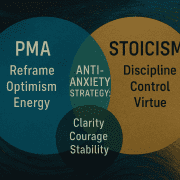
Graphic: Two intersecting circles forming a Venn diagram.
“The happiness of your life depends upon the quality of your thoughts.” — Marcus Aurelius
SECTION 6 — PRACTICAL EXERCISES
Exercise 1: The Stoic “NOW” Reset (30 seconds)
Inhale (4s)
Hold (2s)
Exhale (6s)
Name the emotion
Ask: “Is this under my control?”
Simple bar of waveform showing 4 – 2 – 6 with labels “Inhale – Hold – Exhale”.
Exercise 2: PMA Reframe
Write the anxious thought.
Rewrite the meaning.
Choose one reasonable action.
“You are not your thoughts; you are the one who chooses what to do with them.” — Jay Pacheco
Exercise 3: FACS Awareness Drill
Observe someone’s face for 10 seconds.
Notice brow movement, eye tightness, lip tension.
Identify possible emotions.
Such observations build emotional intelligence instantly.
Image with: Title: “For Teachers, Parents, and Leaders” Text: The Brief drill helps identify early signs of anxiety.
CONCLUSION
Image: Black-and-white portrait gazing calmly into the distance (Stoic, reflective)
Anxiety is part of being human.
Stoicism is part of becoming unstoppable: understanding emotions without an adverse reaction.
When we blend emotional awareness (FACS), psychological science, Stoic philosophy, and Positive Mental Attitude (PMA)…
We build humans who can withstand anything.
“No matter what happens, it is within my power to turn it to my advantage.” — Epictetus
https://pmascience.com/wp-content/uploads/2025/11/blog-2.10.png10241536adminhttps://pmascience.com/wp-content/uploads/2025/01/PMA_lOGO2-300x164.pngadmin2025-11-29 21:48:062025-11-29 21:48:06Stoicism in the Age of Anxiety
Image: Acrylic painting @icoloricanvas by Jay Pacheco, July 17, 2023
Positive Mental Attitude (PMA) is often misunderstood as “positive thinking.”
It isn’t.
PMA is not about ignoring the storm — it is about mastering the inner weather system of your mind so you can walk through any storm with clarity, purpose, and emotional intelligence.
“The greatest weapon against stress is our ability to choose one thought over another.” — William James
In modern psychology, PMA aligns with:
• neuroplasticity,
• epigenetic flexibility,
• cognitive reframing,
• emotional awareness, and
• behavioral resilience.
In Stoicism, PMA reflects:
• controlling the controllable,
• strengthening the will,
• training perception,
• acting with wisdom and courage.
In the Facial Action Coding System (FACS), PMA influences:
• micro-expressions,
• emotional cycles,
• facial tension patterns,
• social signaling.
PMA is not a slogan.
PMA is a biopsychological strategy for life.
This week, we explore what PMA truly is — psychologically, biologically, spiritually — and how anyone, from teenagers to police officers to CEOs, can use it to reshape their emotional landscape.
Image: Cup of green tea symbolizing calm reflection and intentional practice.
SECTION 1 — THE PSYCHOLOGY OF PMA
Image: Minimalist line-art face
PMA begins in the mind, but its effects reach:
• behavior
• hormones
• emotional regulation
• decision-making
• communication
• conflict resolution
• problem-solving
• leadership
1.1 Cognitive Reframing (Modern Psychology)
Psychology reveals that thoughts shape feelings, which in turn shape actions, which in turn shape outcomes.
This is the core of CBT (Cognitive Behavioral Therapy), one of the most effective therapies in the world, derived from Stoicism.
“Between stimulus and response, there is a space. In that space is our power to choose our response.” — Viktor E. Frankl
PMA uses reframing to ask:
“What is the most constructive way to interpret this situation?”
Not “How can I pretend everything is fine?”
But:
“How can I choose the response that empowers me?”
You can teach your brain to pause, reinterpret, and respond differently. Over time, this becomes a mental habit — a default toward strength instead of collapse.
1.2 Stoic Perception Training
Stoics taught the same principle 2,000 years ago:
“You have power over your mind — not outside events. Realize this, and you will find strength.” — Marcus Aurelius
PMA and Stoicism both train the mind to:
• separate fact from interpretation
• slow down emotional reactivity
• choose the most rational next step
This is how leaders avoid panic, parents avoid yelling, teens avoid collapsing, and therapists avoid burnout.
Image: A three-step process: Event → Interpretation → Response, with the term “PMA” above “Interpretation.”
Image: Emotional spectrum canvas (color bands that represent different feelings, matching FACS energy).
PMA influences facial micro-expressions and emotional cycles.
A person with PMA:
• holds less facial tension
• expresses emotions more clearly
• de-escalates conflicts faster
• reads people more accurately
• regulates emotions quickly
Emotional cycles become shorter and less destructive.
This is powerful for:
• teens with anxiety,
• police dealing with conflict,
• teachers reading student distress,
• therapists identifying emotional cues,
• parents understanding silent signals.
“The face is a living map of what the nervous system is feeling.” — Jay Pacheco
Image: Side-by-side faces:
Left: tense jaw, furrowed brows (no PMA / high stress).
Pause the emotion (Breath + Name it)
Notice what you feel. Take 3–5 slow breaths. Name it: “I feel anxious,” “I feel angry,” “I feel disappointed.”
Reframe the meaning
Ask: “What else could this mean?” “What is the lesson or opportunity here?”
Choose the conflict-free option
Pick the response that reduces chaos, not increases it — the option that protects your peace and long-term goals.
Act with disciplined optimism
Take action believing improvement is possible, not guaranteed. You show up, you do the work, you stay curious.
This is the PMA cycle.
“PMA is not about faking happiness. It is about refusing to surrender your mind to chaos.” — Jay Pacheco
Image: A circular image with four segments labeled: Pause → Reframe → Choose → Act, arrows moving in a loop.
SECTION 5 — PMA FOR TEENS, LEADERS, AND PROFESSIONALS
Image: Nature path (Stoic symbolism of journey and choices).
PMA is adaptable. It is not just for “positive people” — it is a discipline for anyone facing real pressure.
Teens → helps anxiety, self-worth, and identity.
Teachers → emotional literacy in classrooms.
Parents → communication without exploding.
Police → conflict de-escalation and nervous system control.
Therapists → emotional neutrality and sharp questioning.
Leaders → strong, calm decision-making.
Researchers → clarity and cognitive precision.
“Waste no more time arguing what a good man should be. Be one.” — Marcus Aurelius
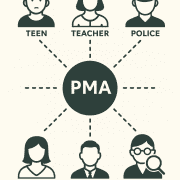
Image: Simple grid showing each role (teen, teacher, parent, police, therapist, leader, researcher), all linked to a central circle labeled “PMA”.
SECTION 6 — CONCLUSION
Image: Book placement of Jay’s published books.
PMA is the bridge between psychology, stoicism, and modern emotional science.
When you train PMA weekly, your life changes monthly, and your identity changes yearly.
“The happiness of your life depends upon the quality of your thoughts.” — Marcus Aurelius
PMA is not a trend. It is a science-backed, spiritually-aligned way of living.
You are not just “thinking positive.”
You are training your brain, your biology, and your future.
Rising Above: Puberty and Mental Health in Adolescents
PMA Science University · Educational · Motivational · Evidence-Based
Dawn after a storm—a small boat steering toward light. Alt text: “Teen steering into calm water after rough waves.”
“Adolescence isn’t a glitch—it’s a forge.” Puberty is the heat; mental health is the metal being shaped. When we understand both, we stop fearing the fire and start mastering it. This blog-guide blends brain science, Stoicism, and Positive Mental Attitude (PMA) so families and schools can turn chaos into choreography—and teens can steer, not just drift.
Understanding the dynamics of adolescence is crucial for mental well-being. In this context, ‘Rising Above: Puberty and Mental Health in Adolescents’ serves as a guiding principle for parents and educators alike.
Note: The book is now available on Amazon, Kobo Books, Apple Books, and Google Play. Audio versions will soon be available on Evarand and other platforms.
“Maps matter—especially in storms.” The ideas below are expanded in the book Rising Above: Puberty and Mental Health in Adolescents by Jay Pacheco. If this article is a shoreline, the book is the sea chart you’ll want on your desk: stories, diagrams, and classroom-ready practices you can use the same day. Buy link eBook:https://a.co/d/3QNvJem and paperback: https://a.co/d/faDIouC
The Crucible: What Puberty Really Is
“Puberty is the engine; adolescence is the journey.” A tiny conductor in the brain (the hypothalamus) cues the pituitary; hormones surge; bodies lengthen; sleep rhythms shift; motivation and attention retune. None of this is random. It is a biological symphony designed to prepare a young person to join and serve their community.
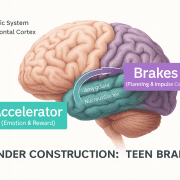
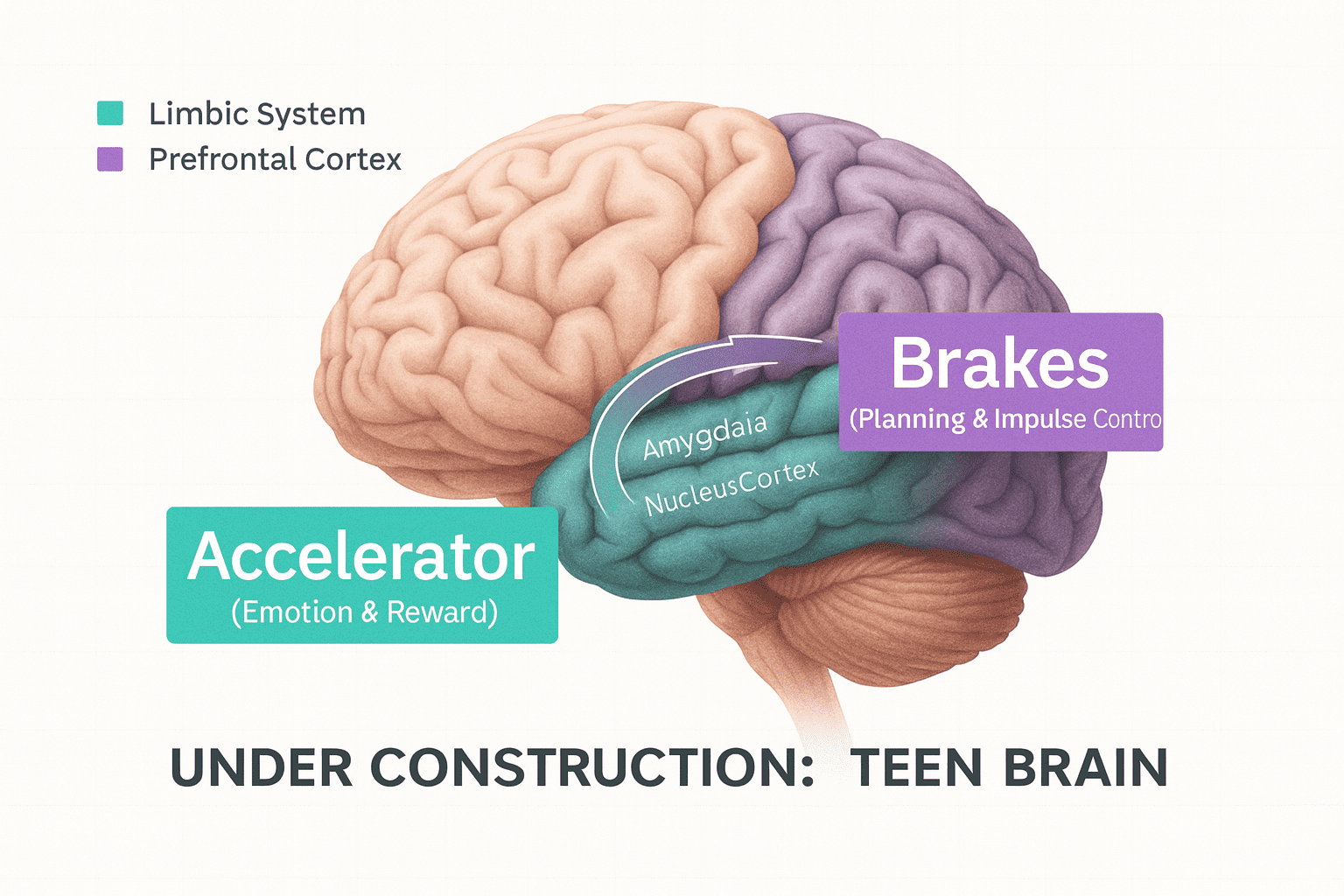
“An accelerator with developing brakes.” The limbic system (emotion/reward) upgrades before the prefrontal cortex (planning/impulse control). Translation: big feelings and novelty-seeking are normal while the “brakes” are still wiring up. Guidance at this stage isn’t micromanagement—it’s installing guardrails on a mountain road.
“Invisible tides move the shoreline.” Puberty pushes melatonin later, so many teens aren’t sleepy until ~11 p.m. Early bells then rip them from deep sleep. The result can look like “attitude,” but it’s often sleep debt. Protect sleep like oxygen: consistent bed/wake times, darker rooms, morning light, and predictable routines.
“Under Construction” diagram—limbic “accelerator” vs. prefrontal “brakes”
Weather vs. Climate: Emotions, Moods, and Meaning
“Name the storm; don’t become the storm.” Emotions are weather—brief and event-linked. Moods are climate—longer and sometimes triggerless. Teaching teens to say “I feel angry right now” (temporary) instead of “I am an angry person” (identity) is the first step in developing self-leadership and resilience.
“Faces whisper before mouths speak.” Noticing micro-expressions is empathy, not interrogation. Try: “You said you’re okay, and I saw a flash of sadness—want to check in?” This opens doors without forcing them and models emotional literacy that teens can use with friends.
“Repetition wires reality.” The brain prunes unused paths and myelinates the ones we keep. Every rep—breathwork, study blocks, kindness—lays faster pathways for tomorrow’s self. You don’t rise to the level of your goals; you fall to the level of your habits.
Lighthouse after a storm. “Lighthouse guiding ships; metaphor for safe adults.”
Many Brains, One Dignity: Neurodiversity & Identity
“Different is a design, not a defect.” Autistic and ADHD adolescents run different control panels. Translate the behavior of adjusting a message—“My load is too high”—by changing the load and environment. Reduce simultaneous demands, ensure clear transitions, provide sensory breaks, use visual schedules, and establish predictable routines. Dignity first; skills follow.
“A name is a lifeline.” Identity—including gender and orientation—is a central developmental quest. Respecting names/pronouns and offering non-shaming care isn’t politics; it’s a protective mental-health practice. One consistently accepting adult can change a trajectory.
“Belonging is medicine.” Clubs, teams, service projects, and faith or cultural communities give teens a crew—people who know their names and expect them next week. Belonging shrinks anxiety by replacing isolation with purpose.
Stoicism × PMA × Neuroscience: A Toolkit That Sticks
“Hold the helm, not the storm.” Stoicism sorts what’s inside our control (effort, attention, values) from what isn’t (yesterday, other people’s opinions). Three classroom-ready drills:
Premeditatio Malorum: calmly rehearse likely obstacles and your responses.
View from Above: zoom out—how will this matter in a week, a year?
Amor Fati: use what happens; turn setbacks into practice.
“Water the flowers, not the weeds.” PMA is disciplined optimism—choose the most useful true story, then act on it. Pair PMA with a Definite Chief Aim (clear weekly goal) and the +1% Rule (tiny daily upgrade) to compound wins over weeks, not just days.
“Experience reshapes expression.” Genes are the library; experience is the librarian. Supportive routines, movement, mindfulness, therapy, and healthy relationships can reduce stress levels and reopen learning windows. Biology is not destiny; it’s potential.
Micro-Playbooks (Print, Save, Share)
“Breathe before you broadcast.” 4-4-6 Breath—inhale 4, hold 4, exhale 6 for two minutes before tests, texts, or tough talks (downshifts arousal).
“Name it to tame it.” Storm Log—Weather (mood word) → Trigger → Tool used → Micro-win.
“Boundaries are riverbanks.” The 3-Line No—“I care. I can’t right now. Let’s schedule.”
“Go the extra mile.” +1% Rule (30 days)—Pick one routine (study, instrument, or service) and upgrade 1% daily. Compounding beats heroics.
“Attention is a muscle.” 15-Minute Gate—Timer on, notifications off, single focus only.
“Friendship is a practice.” Kindness Triad—one thank-you, one genuine check-in, one quiet help each day.
For Parents, Educators, and Coaches: Be the Lighthouse
“Calm is contagious.” Your tone sets the nervous system of the room. Use fewer words, slower pacing, and longer exhales.
“Connection before correction.” Validate first; problem-solve second. Teens learn from people who feel safe.
“Systems beat speeches.” Sleep, sunlight, movement, and mealtimes stabilize minds better than lectures ever will.
“Watch the dashboard.” Sudden withdrawal, persistent irritability, talk of disappearing, self-harm, or eating changes—act early and loop in a professional.
From the Book (Why You’ll Want It on Your Desk)
“We build not just a ship that survives waves but one that harnesses them.” Rising Above pairs vivid stories with biology in plain language, emotional skills that work in hallways, Stoic calm you can practice between classes, and positive mental attitude (PMA) habits that compound into character. It reads like a lab manual for hope—for homes, classrooms, and youth programs.
“Start now; keep going.” If this article helped you, the book provides a comprehensive understanding of the world of poverty and offers tips on how to rise above. Buy link eBook:https://a.co/d/3QNvJem and paperback:https://a.co/d/faDIouC
🛟 Safety & Help (US)
☐ Emergency:911 (immediate danger)
☐ 988 Suicide & Crisis Lifeline: call or text 988
☐ Crisis Text Line: text HOME to 741741
🛟 Safety & Help (EU)
☐ Emergency (EU-wide):112
☐ Emotional Support (many EU countries):116 123 (availability varies)
☐ Child/Youth Helpline (many EU countries):116 111 (availability varies)
☐ Local services: add your country’s national mental-health helpline and hours
🛟 Safety & Help (Latin America)
☐ Emergency: your country’s emergency number (e.g., 911 in Mexico; 131/133 in parts of Chile; 107/911 in Argentina)
☐ National helpline: add your country’s official suicide/mental-health hotline (name + number)
☐ Local services: add state/provincial lines, hospital crisis units, or university hotlines
🛟 Safety & Help (Others / International)
☐ Emergency: your national emergency number (often 112, 911, or local equivalent)
☐ National helpline: add your country’s official suicide/mental-health hotline (name + number)
☐ Local services: school/university counseling, community clinics, faith/community leaders you trust
Note: Numbers and availability can change. Always verify your local crisis resources and add named contacts (one adult at home, one at school, one in the community).
For other regions worldwide, consult the relevant support areas.
Editorial & Rights
“Clarity is kindness.” This article uses short paragraphs, active voice, and classroom-ready language. Scientific ideas are explained in plain terms and paired with practical routines.
https://pmascience.com/wp-content/uploads/2025/10/Image-Brain-2.png10241536adminhttps://pmascience.com/wp-content/uploads/2025/01/PMA_lOGO2-300x164.pngadmin2025-10-22 17:56:562025-10-22 17:56:56Rising Above: Puberty and Mental Health in Adolescents
By PMA Science University • Updated September 15, 2025 • 10–12 min read
On this page
Positive Mental Attitude (PMA): Building the Inner Fortress
Stoicism: Rising Above the Noise
Psychology and the Face of Emotions
Gratitude: The Master Key
Self-Love and Kindness: The Invisible Revenge
Bringing It All Together
Final Reflection: The Best Revenge
Call to Action
“The greatest revenge is not in causing pain but in becoming the person they never thought you could be.”
We live in a world where disappointment, betrayal, and misunderstanding are part of the human experience. When wronged, the temptation is to strike back, to match fire with fire. Yet, history and psychology whisper a more profound truth: revenge burns quickly, but self-improvement builds a lasting legacy. The true conqueror of any insult is the one who transforms pain into power—through growth, discipline, and gratitude.
Positive Mental Attitude: Building the Inner Fortress
“A man is not finished when he is defeated. He is finished when he quits.” — Epictetus
A positive mental attitude (PMA) is the foundation of resilience. It’s more than “thinking happy thoughts”; it is a disciplined lens through which life is filtered. When we maintain PMA, setbacks become setups for comebacks.
Science supports this: research on neuroplasticity shows our brains are constantly rewiring. A mind trained to look for solutions rather than problems strengthens pathways linked to creativity, resilience, and emotional stability. Just as a muscle grows under resistance, PMA grows in the face of adversity.
Instead of asking, “Why me?”, PMA teaches us to ask, “What can I learn from this?” That shift alone transforms weakness into wisdom.
Illustration: Your path strengthens with each deliberate step.
Hook: Many people seek revenge to hurt others. However, the energy used for harm can be redirected and invested in healing. Focus that drive on building skills, health, and purpose—and see your progress surpass your past.
Stoicism: Rising Above the Noise
“You have power over your mind—not outside events. Realize this, and you will find strength.” — Marcus Aurelius
Stoicism is the ancient art of emotional armor. It does not numb us to life but prepares us for its storms. A Stoic does not waste energy plotting revenge. Why? Because anger ties us to our offenders, while self-mastery sets us free.
The Stoics remind us that control lies solely within ourselves. We cannot govern betrayal, loss, or injustice. But we can govern our responses. To sharpen this truth, Seneca warned: “The best revenge is to be unlike him who performed the injury.”
By embracing Stoicism, we rise above the noise of resentment. Instead of dwelling on wounds, we cultivate virtues—discipline, courage, and justice. That is a strength no enemy can undo.
Psychology and the Face of Emotion
“The face is a mirror of the mind, and eyes without speaking confess the secrets of the heart.” — St. Jerome
Modern psychology, through tools like the Facial Action Coding System (FACS), reveals how emotions betray themselves through microexpressions—fleeting, involuntary facial movements that expose the truth before words are spoken.
Revenge and bitterness are etched into the body. Tight jaws, furrowed brows, restless eyes—these signals reflect inner turbulence. Conversely, resilience and gratitude radiate through open expressions, relaxed posture, and genuine smiles.
The Stoics, mystics, the Bible, and even present-day psychology, as well as Research by Dr. Paul Ekman, show that gratitude and compassion not only change how we feel but also change how we appear. When you improve yourself, you don’t just rise inside—you shine outside. Your very face becomes living evidence of transformation.
Microexpressions: the body’s silent truth-tellers.
Gratitude: The Master Key
“Gratitude turns what we have into enough.” — Aesop
Gratitude is not passive—it is powerful. Studies at UC Davis and the University of Miami found that individuals who practiced daily gratitude journals experienced higher optimism, reduced depression, and stronger immune systems.
When wronged, gratitude helps us reframe our perspective. Instead of asking, “Why did this happen to me?” gratitude asks, “What hidden blessing lies in this?”
Like alchemy, gratitude transforms poison into medicine. It shifts our gaze from what is broken to what is still whole. And in doing so, it builds resilience, self-love, and an unshakable inner foundation.
Self-Love and Kindness: The Invisible Revenge
“Loving yourself is the beginning of a lifelong romance.” — Oscar Wilde
Self-love is the ultimate rebellion in a world that profits from our insecurities. Acts of kindness, both inward and outward, dismantle bitterness. They say, “You did not destroy me. You made me stronger.”
Think of self-love as tending a garden. Every act of forgiveness is water. Every affirmation is sunlight. Every habit of discipline is fertile soil. Soon, blossoms of confidence rise where once only weeds of resentment grew.
And kindness? It is the fruit others taste. It is revenge without venom—the quiet triumph of thriving while others expected you to wither.
Bringing It All Together: The Alchemy of Growth
“Do not waste yourself in rejection. Rise above, and rise daily.”
When PMA (hope), Stoicism (discipline), psychology (understanding), and gratitude (transformation) converge, they create a resilient mindset capable of extraordinary growth. Together, they form a shield and a sword—not to strike back at others, but to carve a brighter path forward.
Revenge, at its best, is short-lived. But improving yourself daily is eternal. It’s the kind of victory that reverberates through generations, turning pain into purpose, wounds into wisdom, and bitterness into brilliance.
Daily Protocol (5–10 minutes)
PMA Primer (1 min): Name one challenge; write one solution-focused action.
Stoic Check (2 min): What’s in my control? What must I release?
FACS Awareness (1 min): Relax the jaw, drop the shoulders, soften the brow, breathe slowly.
Gratitude Trio (2 min): Three specific gratitude’s; one person to thank.
Extra Mile (2–4 min): Do one unexpected act of diligence or kindness.
Remember: Revenge is a sprint fueled by anger; improvement is a marathon driven by meaning.
Final Reflection: The Best Revenge
“The best revenge is massive success.” — Frank Sinatra
So, when life betrays you, when others doubt you, or when critics laugh at your dreams—remember this: their actions do not define your destiny. What defines you is your choice to rise, learn, and thrive.
Channel your energy into growth. Practice gratitude daily. Walk the Stoic path. Radiate kindness. Love yourself deeply. Improve yourself relentlessly.
Because at the end of the day, the sweetest revenge is not bitterness—it’s becoming unstoppable.
Call to Action
At PMA Science University, we believe personal growth is not a luxury—it is a discipline. Start your journey today:
Journal daily: Record three gratitudes, one lesson, and one act of kindness.
Practice Stoic reflection: Each evening, ask, “What did I control today? What must I release?”
Improve 1% daily: Small gains compound into massive victories.
👉 Subscribe to our PMA Science Blog for insights that blend Stoicism, psychology, PMA, and gratitude into practical wisdom for your life.
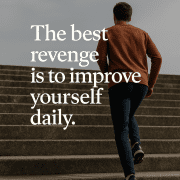
https://pmascience.com/wp-content/uploads/2025/09/feature.png15361024adminhttps://pmascience.com/wp-content/uploads/2025/01/PMA_lOGO2-300x164.pngadmin2025-09-15 16:25:302025-09-15 16:25:30The Best Revenge Is to Improve Yourself Daily
What You Wish You Knew About Mindset in Your Early 20s
Series of Personal Growth | Blog 4 of 4 | PMA Science University
“The mind, once stretched by a new idea, never returns to its original dimensions.”
— Ralph Waldo Emerson
Introduction: The Myth of “Being Grown Up” at 20
Most people believe adulthood begins at 18. In reality, your brain is still under construction well into your mid-20s. Neuroscience shows that puberty isn’t truly over until around age 25, when the prefrontal cortex—the brain’s decision-making, impulse-control, and future-planning center—fully matures.
So in your early 20s, you are not fully “set” — you are a masterpiece in progress.
At PMA Science University, we teach that these years are a mental training ground. How you shape your thoughts now determines not just your next decade, but the trajectory of your life.
1️⃣ PMA: Your First Superpower
“A Positive Mental Attitude is the right mental attitude in any circumstance.”
— Napoleon Hill
Your early 20s are filled with firsts:
First job. First serious relationship. First big failure. First life-altering choice.
A Positive Mental Attitude (PMA) is your mental compass. It’s not naïve optimism—it’s strategic thinking powered by hope. PMA doesn’t say, “Everything will be perfect.” It says, “No matter what happens, I will find a way to grow from it.”
📚 Science Insight:
A 2019 University of Illinois study found that individuals with higher optimism scores had 35% less risk of major health issues and greater life satisfaction over time.
In your early 20s, PMA acts like mental sunscreen—protecting you from the harsh rays of failure and rejection, while still allowing you to grow stronger.
2️⃣ Stoicism: Your Anchor in the Storm
“You have power over your mind—not outside events. Realize this, and you will find strength.”
— Marcus Aurelius
The 20s are turbulent seas: friendships change, careers zigzag, and self-identity shifts. Stoicism is your anchor.
The Stoics teach that while you cannot control every wave, you can control your sails—your mindset, your actions, your character.
🛡️ Premeditatio Malorum (pre-meditation of adversity) prepares you for disappointment without making you cynical. By visualizing obstacles in advance, you react less emotionally and more strategically.
📌 Example:
If you anticipate that your job application might be rejected, you can prepare an alternative plan in advance—turning potential despair into immediate momentum.
3️⃣ Psychology & FACS: Understanding Yourself and Others
“The face is the mirror of the mind.”
— Cicero
Your early 20s are a crash course in human relationships—friends, colleagues, partners. Understanding emotions becomes a superpower.
Enter FACS (Facial Action Coding System), developed by Dr. Paul Ekman. It’s the science of decoding microexpressions—tiny, involuntary facial movements that reveal a person’s actual emotional state.
🧠 Why it matters in your 20s:
It helps you navigate relationships with clarity.
It improves your ability to read your own emotions before they spiral.
It trains you in empathy—a critical leadership and life skill.
📌 Example:
Recognizing the microexpression of fear in a co-worker’s face before they speak can help you offer reassurance and build trust instantly.
4️⃣ Gratitude, Kindness & Self-Love: The Fuel for Mental Longevity
“Gratitude turns what we have into enough.”
— Melody Beattie
In your early 20s, it’s tempting to measure your worth by external milestones—career title, income, social media likes. But the real wealth comes from internal stability.
🌸 Gratitude rewires your brain toward optimism, improving both mood and resilience.
💛 Kindness strengthens your social network and boosts oxytocin, the bonding hormone.
💎 Self-love builds unshakable confidence, helping you set healthy boundaries.
📚 Neuroscience Note:
Daily gratitude practice activates the brain’s prefrontal cortex, increasing emotional regulation and reducing anxiety.
5️⃣ Resilience: The Muscle You Must Train Early
“Fall seven times and stand up eight.”
— Japanese Proverb
Resilience isn’t about avoiding pain—it’s about bouncing back stronger. And your early 20s are the perfect training ground.
Each challenge you face now is a repetition in the gym of life. Every rejection letter, failed plan, or broken heart is a weight lifted. Over time, you become stronger not because life gets easier—but because you become harder to break.
🔄 Bringing It All Together
In your early 20s:
PMA helps you believe in possibilities.
Stoicism keeps you steady in storms.
Psychology & FACS help you connect with yourself and others.
Gratitude, kindness, and self-love build your inner foundation.
Resilience ensures you rise every time you fall.
And remember—your brain is still evolving. What you feed it now becomes the architecture of your future self.
📌 Final Reflection
“He who is brave is free.”
— Seneca
If you’re in your early 20s, don’t rush to “have it all figured out.” This is your laboratory of life—a rare window where mistakes are teachers, challenges are trainers, and time is your ally.
Shape your mind now with PMA, Stoicism, gratitude, kindness, self-love, and resilience, and you will thank yourself at 30, 40, and beyond.
🎓 Enroll in “Creating Behavioral Change: From PMA to Behavioral Change” → pmascience.com/courses
💬 Comment below: What’s one thing you wish you knew about mindset earlier?
https://pmascience.com/wp-content/uploads/2025/08/1.jpg15361024adminhttps://pmascience.com/wp-content/uploads/2025/01/PMA_lOGO2-300x164.pngadmin2025-08-12 19:36:552025-08-12 19:36:55Insights into Mindset in Your Early 20s
How Stoicism Helps You Overcome Your Biggest Challenge
Series of Personal Growth I One of Four
“You have power over your mind — not outside events. Realize this, and you will find strength.” — Marcus Aurelius
Introduction:
How Stoicism and Overcoming Challenges Shape Our Lives
Have you ever stood at the edge of your breaking point?
That moment where everything inside you wants to collapse… and yet something greater stirs within.
That something — the inner fire that refuses to die — is what this blog is about.
At PMA Science University, we teach that your biggest challenge is your most significant opportunity for growth within, without, and in alignment with the cosmos. And nothing equips you better for that challenge than the blend of:
Understanding Stoicism and Overcoming Challenges can provide insights into how to navigate life’s trials.
🧱 Stoicism
⚡ Positive Mental Attitude (PMA)
💛 Gratitude
🧬 Psychology
🌸 Kindness
💎 Self-Love
🛡️ Resilience
🏛️ 1. Stoicism:
Your Unshakable Inner Fortress
“If you are distressed by anything external, the pain is not due to the thing itself, but to your estimate of it.” — Marcus Aurelius
Stoicism is the philosophy of strength under pressure.
It doesn’t promise comfort — it promises clarity. It doesn’t shield you from the storm — it makes you weatherproof.
In a world of chaos, Stoicism teaches:
“You control how you think, act, and respond. Everything else is noise.”
Modern science agrees. CBT (Cognitive Behavioral Therapy), used worldwide to treat anxiety and depression, is built on Stoic ideas — especially around reframing perception and mastering emotional response.
📚 Research Insight:
Practicing Stoic journaling and reflection reduces stress hormones, enhances neural regulation, and improves decision-making under duress (University of Exeter, Stoic Week studies, 2022–2024).
Stoicism = Emotional Musculature. The more you train it, the more resilient you become.
🔥2. Positive Mental Attitude:
Fuel for Forward Motion
“A positive mental attitude is the right mental attitude in all circumstances.” — Napoleon Hill
Where Stoicism says: “Endure,” PMA says: “Advance.”
PMA is a belief system rooted in constructive thinking and deliberate optimism. It helps you turn setbacks into stepping stones, even when everything seems lost.
🔬 Science Speaks: Studies from Harvard and UPenn’s Positive Psychology Center show that cultivating optimism and PMA reduces risk of chronic disease, improves life expectancy by up to 10 years, and enhances creative problem-solving.
🔍 Real-world PMA looks like:
Rebuilding after failure
Showing up when you don’t feel ready
Believing there’s always another way forward, PMA = Action-oriented hope.
🌻 3. Gratitude:
The Emotional Alchemy That Changes Everything
“Gratitude turns what we have into enough — and more.” — Melody Beattie
Gratitude is not passive. It’s a radical reframe of life itself.
It shifts focus from scarcity to abundance, from pain to possibility, from fear to faith.
Dr. Robert Emmons’ research shows that people who practice daily gratitude experience:
25% more happiness
Better immune function
Lower stress levels
Stronger emotional resilience
🧠 Brain scans show that gratitude practice activates the prefrontal cortex (decision making) and hypothalamus (emotion regulation), creating long-term shifts in emotional stability.
Gratitude = Inner Light. It helps you see beauty even in broken places.
🤝 4. Kindness & Self-Love:
Strength with Softness
“Be kind, for everyone you meet is fighting a hard battle.” — Plato
Kindness is not fluff. It is spiritual leadership.
Whether directed toward others or inward toward yourself, kindness rewires your biology for health, empathy, and peace.
💡 Scientific Proof:
Kindness boosts oxytocin (“love hormone”)
Acts of compassion activate mirror neurons and reward centers
Self-compassion reduces cortisol and promotes emotional balance
Self-love, when rooted in humility and truth, isn’t ego — it’s alignment. It’s the decision to respect, nourish, and protect yourself as a sacred vessel.
At PMA Science, we teach:
🧘♀️Self-love is the foundation for disciplined greatness. You cannot pour from an empty cup.
🔁 5. Returning to Stoicism:
The Anchor of Integration
“To love only what happens, what was destined. No greater harmony.” — Marcus Aurelius
When all pieces come together—Stoicism, PMA, gratitude, kindness, self-love—what emerges is a masterfully integrated mindset.
And yet, we always return to Stoicism.
Why?
Because it holds everything in place, it is the backbone.
After all the growth, Stoicism becomes the structure that contains your wisdom and the stillness that protects your peace.
📊 Stoic Practice Outcomes (Modern Stoicism Study):
14% reduction in negative emotion
13% increase in life satisfaction
19% growth in emotional clarity and purpose after 1 week of Stoic practice
The Stoic is not a cold philosopher — but a warm, grounded warrior.
🧠 Final Reflection:
Your Biggest Challenge Is Your Greatest Catalyst
“He who is brave is free.” — Seneca
Your biggest challenge isn’t the world outside—it’s the voice within that says, “I can’t.” But the truth is:
✅ You can. ✅ You must. ✅ You were built for this.
You are a walking empire in the making — not despite your challenges, but because of them.
The Inspiring Journey of Science, Nutrition, and Unyielding Determination
(The Jay Pacheco Adventure)
Join Jay Pacheco on an inspiring journey to overcome pre-diabetes, a precursor to Type 2 diabetes. This compelling narrative integrates advanced scientific research, transformative nutritional strategies, and a resilient Stoic mindset. Learn how Jay transformed challenges into opportunities, forging an extraordinary path toward health and vitality. Prepare for an empowering experience that highlights resilience, knowledge, and the steadfast determination to regain one’s health.
With Jay Pacheco’s permission to mention his name, discuss the car accident, and share some of his life story.
When an adversary strikes, a stoic mindset, a positive mental attitude (PMA), gratitude, applied faith, and action are a great antidote. – Jay Pacheco
Introduction
In the early fall of 2024, Jay Pacheco experienced a life-changing event that would forever alter his destiny. A reckless 19-year-old, driving at an estimated 60 to 70 km per hour, failed to yield at a yield sign and collided with the left side of Jay’s car, turning a normal evening into a near-fatal disaster. The crash sent shockwaves through Jay’s life, plunging him into chaos and uncertainty as he dealt with the aftermath of that devastating collision. With severe injuries affecting his entire left side—his neck, head, shoulder, ribs, and stomach—his body and metabolism were thrown into disarray, raising serious health concerns. Just when a diagnosis of Type 2 diabetes seemed inevitable in March 2025, Jay made an astonishing recovery that left his doctors in awe.
In a remarkable turnaround during the final two weeks of March 2025, Jay exhibited a faster reversal of his pre-diabetic indicators than medical professionals expected. How was this exceptional achievement possible? Through the use of an extraordinary combination of rigorous nutritional discipline, persistent physical activity, and an unwavering Positive Mental Attitude (PMA), fundamentally rooted in Stoic philosophy, gratitude, and faith.
Jay’s remarkable journey exemplifies resilience and determination, demonstrating that near-Type 2 diabetes and the regulation of glucose levels—conditions often regarded as chronic—can be effectively managed, and in some cases, reversed. His story serves as an inspiring example of how gratitude, stoicism, a positive mental attitude (PMA), scientific principles, and a disciplined mind-body approach can facilitate healing and transformation.
In this profound exploration, we will:
• Understand what Type 2 diabetes is, including its causes, symptoms, and what modern medicine says about the possibility of reversal.
• Review cutting-edge research and reputable sources showing how diet, exercise, and even psychological factors can lead to diabetes remission.
• Learn how Stoic philosophy (think Marcus Aurelius and Epictetus) and PMA (à la Napoleon Hill) can strengthen one’s mindset to overcome illness.
• Break down the psychological and behavioral strategies – becoming an observer, investigator, and disciplined social being – that support healing.
• Explore Jay’s precise juice regimen (beetroot, carrot, apple, ginger, lemon) with a science-based perspective on how these ingredients impact blood sugar and metabolism.
• Highlight quotes from ancient Stoics and modern thinkers to inspire resilience.
• Emphasize how gratitude, mindset, and daily rituals contribute to overall well-being and recovery.
•Share other real-life examples of diabetes reversal and testimonials of hope.
Whether you’re aiming to reverse Type 2 diabetes, support a loved one, or find inspiration in the blend of science and philosophy in healing, this comprehensive guide will provide you with the knowledge and motivation you need. It’s time to explore how mind and body can work together to overcome a condition long considered “incurable.” The Human Body: A Universe Within, a new book Jay is writing…
Understanding Type 2 Diabetes
Moroccan Quinoa Salad: Fresh Veggies, Dates, and Pomegranate with Mint.
Infusion tea: orange, lemon, ginger, garlic, and rosemary.
During the third week of June 2025, I had a delightful evening at a vegetarian restaurant in Gdansk, where the servers greeted me with such warmth. It was my first time indulging in a vegetarian two-course dinner, complemented by a refreshing citrus tea (pictured above)—what a wonderful experience! Thanks to some diet changes I made in March 2025, I don’t have type 2 diabetes anymore, but I still follow a diabetic-friendly diet to help my body recover more healthily. – Jay Pacheco
Type 2 diabetes is a chronic metabolic condition characterized by elevated blood glucose (sugar) levels due to the body’s inability to use insulin effectively. In Type 2 diabetes, cells become resistant to insulin’s signals (insulin resistance), and the pancreas may not produce enough insulin to overcome this resistance. The result is that sugar builds up in the bloodstream instead of being taken up by cells for energy. Over time, chronically high blood sugar can damage vital organs and tissues. Common symptoms include excessive thirst and urination, fatigue, blurry vision, slow-healing wounds, and numbness or tingling in the extremities. If unmanaged, Type 2 diabetes can lead to serious complications like heart disease, nerve damage, kidney failure, and visionloss.
Type 2 diabetes develops due to a combination of genetic predisposition and lifestyle factors. Causes and risk factors often include a diet high in refined carbohydrates and sugars, being overweight (especially with visceral fat around the organs), a sedentary lifestyle, chronic stress, and genetic factors. Unlike Type 1 diabetes (an autoimmune condition where the body produces little or no insulin), Type 2 is strongly linked to lifestyle and usually develops in adulthood (though it’s now increasingly seen in younger people with rising obesity rates ).
For decades, Type 2 diabetes was viewed as a lifelong condition – something to “manage” rather than cure. Patients were often told that it’s a progressive disease: medications can control it, but reversal was not expected. Standard medical advice has been that there is no cure for Type 2 diabetes and that it will progressively worsen without ever truly going away. However, emerging research over the past 10–15 years has challenged this notion, introducing the concept of diabetes remission. We now understand that in many cases, Type 2 diabetes can be reversed (put into long-term remission) through substantial lifestyle changes that tackle the root cause – insulinresistance.
Is Type 2 Diabetes Reversible?
Medical understanding is evolving to embrace the idea that Type 2 diabetes can be reversed (or induced into remission) in a significant subset of patients. Remission refers to maintaining normal blood sugar levels without requiring glucose-lowering medication for an extended period. Achieving this often hinges on weight loss (especially loss of visceral fat in the liver and pancreas) and improved insulin sensitivity.
Research by diabetologists like Professor Roy Taylor (Newcastle University, UK) has revealed a “twin cycle” mechanism: excess calories lead to fat buildup in the liver, which causes insulin resistance and excess glucose production; simultaneously, fat infiltrates the pancreas, impairing insulin secretion. If this cycle is broken by drastically reducing calorie intake and weight, blood sugar regulation can normalize. In Taylor’s landmark studies, patients put on a very low-calorie diet (approximately 800 calories per day) for 8 weeks lost significant weight and, in many cases, restored their fasting blood sugar levels to normal. In one trial, approximately 46% of patients achieved diabetes remission after completing an intensive weight-loss program, compared to 4% of the control group. Another study reported an impressive 61% remission rate after one year of a diet-and-exercise intervention, compared to only 12% in those receiving standard care. The key seems to be early and aggressive intervention – patients who had developed diabetes within the past few years and then lost around 10–15% of their body weight were much more likely to become non-diabeticagain.
It’s not just crash diets that work. Bariatric surgery (weight loss surgery) has long been known to send Type 2 diabetes into remission even before significant weight loss occurs, thanks to hormonal changes. However, for those who prefer non-surgical methods, intensive lifestyle changes can mimic these effects. The consensus in recent years is that with the right approach, especially if applied soon after diagnosis, Type 2 diabetes is reversible or at least can be dramatically improved. Everyone is different – not everyone will achieve remission – but the possibility is real. Doctors now aim for “diabetes remission” as a goal in certain patients, rather than just maintaining the condition.
Importantly, “reversal” doesn’t mean it’s gone forever, regardless of lifestyle. Many experts prefer the term remission because if old habits return, so can high blood sugar. In Jay Pacheco’s case, catching his dysregulated blood sugar early and attacking it with full-force lifestyle changes allowed him to dodge a formal diabetes diagnosis. His fasting glucose and other markers returned to healthy ranges within weeks – effectively a reversal – but he acknowledges that staying in remission requires ongoing discipline. As we explore Jay’s regimen, we’ll see how science-based strategies and mental resilience combine to sustain long-term success.
The Role of Diet and Nutrition in Reversal
Dietary change is the cornerstone of Type 2 diabetes reversal. Since Type 2 is fundamentally a condition of energy overload – too much sugar and fat floating in the system – the most direct way to reverse it is to change what, how, and how much you eat. This was Jay’s first area of focus in his recovery.
Modern research highlights a few effective nutritional strategies:
•Caloric Reduction & Weight Loss: Weight loss is the most effective strategy for most individuals. By creating a calorie deficit (through diet, often combined with exercise), the body is forced to use its stored fat for energy. Crucially, it begins drawing on fat stored in the liver and pancreas. Studies show that losing as little as 10–15% of body weight can lead to diabetes remission in most patients. Many remission trials use a low-calorie diet (LCD) or very-low-calorie diet (VLCD) to induce rapid weight loss. For example, one study found that an average weight loss of ~26 pounds was sufficient to normalize blood sugar levels in over half of the participants. The key takeaway is clear: losing visceral fat reduces stress on insulin-producing cells. As Dr. Shahrad Taheri puts it, if weight is lost early enough in the disease process, “you can reverse the disease” and avoid the cascade of complications.
•Low-Carbohydrate Diets: Since carbohydrates directly impact blood glucose, reducing total carb intake (especially refined carbs) is a quick way to control blood sugar. Many find success with low-carb, high-fat (LCHF) or ketogenic diets, which dramatically reduce bread, pasta, sugary foods, and even limit fruits and starchy vegetables. By keeping carbs extremely low, these diets minimize blood sugar spikes and insulin levels, often leading to rapid improvements. One example is the Virta Health program, which uses a monitored ketogenic diet; their patients have shown significant rates of medication-free diabetes remission. Dr. Jason Fung, author of The Diabetes Code, emphasizes, “It’s a dietary disease, so therefore the treatment demands a dietary solution”. He advocates cutting added sugars and refined starches, avoiding constant snacking (to let insulin levels drop between meals), and incorporating intermittent fasting. By giving the body extended breaks from food intake, intermittent fasting helps burn off excess glucose and fat stores, effectively resetting insulin sensitivity.
•Whole-Food, Plant-Based Diets: At the other end of the spectrum, some patients have reversed diabetes with high-carb, yet unprocessed, plant-based diets. These diets (promoted by experts like Dr. Neal Barnard and reflected in the story of NYC Mayor Eric Adams) focus on whole grains, legumes, vegetables, and fruits while eliminating animal fats and refined foods. The mechanism is through fat loss and improved insulin function. When you eliminate calorie-dense, fatty, and sugary junk foods and consume high-fiber plant foods, you naturally consume fewer calories and lose weight. Fiber-rich foods also slow glucose absorption and improve gut health. Eric Adams, for instance, adopted a strict plant-based diet and within three months lost 35 pounds, restored his vision, and reversed his diabetes. His book, Healthy at Last, documents his transformation and how a nutrient-dense diet can help combat chronic disease. There are multiple paths, but the common denominator is eating in a way that nourishes the body and reduces excess body fat.
•Specific Foods and Nutrients: Beyond overall diet patterns, research suggests certain foods have particular benefits for blood sugar management. Diets rich in fiber (especially soluble fiber from oats, fruits, beans, etc.) help regulate post-meal glucose by slowing carbohydrate absorption. Lean proteins and healthy fats (from sources like fish, olive oil, nuts, and avocados) promote satiety and steady energy, helping prevent overeating. Many patients adopt a “lower glycemic index (GI)” approach, choosing carbs that don’t spike blood sugar as sharply (e.g., brown rice over white, whole fruit over juice). Additionally, some foods are being studied for insulin-sensitizing or glucose-lowering effects – for example, cinnamon, vinegar, and chromium have all been researched for modest benefits. While no single “superfood” will reverse diabetes, combining wise choices can create a synergistic effect.
One intriguing element in Jay Pacheco’s nutritional toolkit was his daily juicing regimen, which we will examine later. Consuming juices might seem counterintuitive for a diabetic (or nearly diabetic) person since they can be high in sugar. Still, Jay’s regimen was carefully designed to maximize micronutrients while minimizing its impact on blood sugar. It included vegetables like beetroot and carrots, as well as boosters like ginger and lemon, which likely aided his metabolism in unique ways (more on the science behind these ingredients in an upcoming section).
It’s worth noting that sustainability is key. A crash diet done for a few weeks might temporarily reverse diabetes, but to keep it reversed, one must transition to a maintainable healthy eating pattern. Jay recognized this: after his initial intense phase, he shifted into a balanced diet that he could stick with long-term (cutting out processed sugars and refined carbs entirely, controlling portions, and continuing daily veggie juices and lean proteins).
Nutrition Takeaway: Reversing Type 2 diabetes through diet is about draining the excess sugar and fat from your system. Any approach that consistently causes you to burn more than you consume – and focuses on whole, unprocessed foods – will move you toward remission. Whether it’s a low-carb strategy, plant-based eating, meal replacements, or fasting, find a method you can commit to. As the Stoics might say, “Treat your body as a temple” – fuel it with wholesome foods and it will reward you with health.
The Power of Exercise in Diabetes Management
Jay Pacheco – June 2025
No lifestyle reversal would be complete without exercise, and Jay Pacheco’s plan was no exception. As soon as he was physically able after being injured in a car accident caused by a reckless driver, Jay incorporated daily physical and mental activities to rejuvenate his mind and body, boost his gratitude, and improve his insulin sensitivity. Exercise is often called the most underutilized diabetes medicine – when you move your muscles, they soak up glucose from the bloodstream for fuel, independent of insulin. This can dramatically lower blood sugar in the short term, and, over the long term, regular exercise can reverse insulin resistance by reducing body fat and building lean muscle.
Here’s what exercise does for Type 2 diabetes:
•Improves Insulin Sensitivity: During exercise, muscle contractions enable cells to absorb glucose without requiring as much insulin. This effect can last for hours after the workout. Over time, training makes cells more responsive to insulin even at rest. Studies have shown that even a brief period of consistent exercise can yield results. For example, 2 weeks of intensive exercise training have been able to normalize blood sugar in a significant number of prediabetic individuals, essentially halting the progression to full diabetes. Both aerobic exercise (such as brisk walking, cycling, and swimming) and resistance training (including weightlifting or bodyweight exercises) contribute to improved glycemic control.
•Reduces Visceral Fat: Exercise, especially when combined with a healthy diet, preferentially burns fat stored around the abdomen (visceral fat). This is precisely the fat that causes insulin resistance. By shrinking your waistline and internal fat deposits, exercise addresses the root problem of Type 2 diabetes. Research indicates visceral fat is more strongly linked to insulin resistance than subcutaneous fat; thus, losing a few inches off the belly via exercise can translate into significantly better blood sugarlevels.
•Lowers Blood Sugar Immediately: It’s well known among people with diabetes that a short walk after a meal can lower the post-meal glucose spike. Jay used this principle daily – after each meal, even if it was just his juice, he would walk or do light yoga. This habit helped keep his blood sugar levels steady. Exercise acts like a “sponge” for blood glucose; one can often see a high reading drop by 20–40 points (mg/dL) after moderate activity.
•Improves Cardiovascular Health: People with Type 2 diabetes are at high risk for heart disease. Exercise strengthens the heart, improves circulation, and lowers blood pressure and cholesterol – critical benefits for overall health and helping to repair the damage that high blood sugar may have caused to blood vessels. In Jay’s case, the accident-related injuries meant he had to start slow with gentle physical therapy exercises. As he healed, he progressed to more intense workouts. This not only reduced his risk of diabetes but also accelerated his injury rehabilitation by improving blood flow to the affected tissues.
• Boosts Mood and Stress Resilience: Exercise has potent psychological effects that extend beyond its physical benefits. It releases endorphins, reduces stress hormones, and can alleviate anxiety and depression, conditions that often accompany and exacerbate diabetes. Jay found that his late morning, midday, or afternoon workouts cleared the mental fog and lethargy that had plagued him when his blood sugar was high. He often remarked that breaking a sweat gave him a sense of accomplishment and control, reinforcing his Stoic-PMA mindset. As little as 30 minutes of exercise a day is associated with better mood and improved regulation of appetite and sleep, all of which help manage diabetes.
In summary, exercise, reading, writing, gratitude, faith, and smiling were non-negotiable components of Jay’s diabetes reversal strategy—and they should be for anyone seeking to improve their metabolic health. The Stoics emphasized the importance of strengthening both one’s body and one’s mind. Musonius Rufus (often called the “Roman Socrates”) advocated physical training to build character and endurance. In the context of diabetes, discipline in exercise builds both metabolic strength and mental toughness.
Start where you are: if you’re sedentary, even 10 minutes of walking daily is a good starting point. Jay’s journey to reclaiming his fitness started with the fundamentals—embracing the power of simple walks and gentle stretching. Each small stroll around his home and the gym ward became a stepping stone towards a vibrant, healthier lifestyle. Every bit counts, and consistency is far more critical than intensity. Over time, you can challenge yourself with progressive goals – maybe walking turns into jogging, light weights become heavier, and 10 minutes becomes 45. The key is to establish a daily ritual, just like taking a medicine – except this medicine is free and has only sound side effects.
Cultivating a Positive Mental Attitude (PMA) for Healing
On the vibrant afternoon of Monday, June 16, 2025, I received an email from my lawyer that sent a jolt of adrenaline through me. The insurance company had decided to deny much of my medical, medicine, and physiotherapy coverage, claiming my injuries weren’t worth enough. But instead of feeling defeated, I embraced a powerful, stoic mindset! After all, I’d faced a similar roadblock in January 2025 when they refused to reimburse my medical bills. That experience became pivotal, teaching me resilience and the art of maintaining a positive outlook. This blog is a thrilling reflection of my journey, showcasing how I’ve tackled adversities head-on with grace and determination. – Jay Pacheco
While diet and exercise target the body, the mind plays a profound role in reversing illness. Jay Pacheco firmly believes that his unwavering Stoic and Positive Mental Attitude (PMA) was the glue that held all the other pieces together. In the darkest days after the car accident, when pain, fear, and the shock of a potential diabetes diagnosis could have overwhelmed him, Jay turned to Stoicism and PMA principles to maintain hope and determination.
What exactly is PMA? Coined and popularized by success thinkers like Napoleon Hill (in Think and Grow Rich and later in Success Through a Positive Mental Attitude), PMA is the philosophy that maintaining an optimistic, solution-oriented mindset attracts positive outcomes. It doesn’t mean ignoring the reality of a situation; instead, it means focusing on possibilities and taking constructive actions, rather than dwelling on obstacles. In health, PMA can significantly influence behavior and even physiological responses to stress.
Here’s how a positive mindset aids in diabetes management and recovery:
•Better Stress Management: A diagnosis (or near-diagnosis) of diabetes can be a stressful experience. Stress raises cortisol, a hormone that increases blood sugar. Chronic stress can thus worsen diabetes control. A positive attitude helps break the vicious cycle of stress and high blood sugar. By facing challenges with optimism, patients experience less of the harmful “fight or flight” response, which causes glucose levels to soar. As an example, Jay practiced reframing thoughts: instead of thinking “Why me? This is terrible,” he would deliberately say, “This is a challenge, and I love challenges. I will come out stronger.” This cognitive reframing is a classic PMA and Stoic strategy that lowers perceived stress. It’s echoed in modern psychology as well – techniques like cognitive-behavioral therapy (CBT) teach individuals to challenge negative thoughts and replace them with more empowering ones.
•Enhanced Motivation and Adherence: Managing diabetes or reversing it requires consistent daily effort, including eating healthy meals, exercising, monitoring, and possibly taking medications or supplements. It’s easy to burn out or feel deprived. A person with a positive outlook is more likely to see these not as burdens, but as investments in a better life. Research confirms that those who view their condition proactively tend to have better self-carebehaviors. In an international study, diabetes patients with personal resilience and a positive outlook reported finding “silver linings” in their illness, such as adopting healthier habits and appreciating life more, which kept them motivated. Jay embodied this: he treated his blood glucose monitor and meal plan as tools of empowerment rather than symbols of disease. Each day of perfect readings and disciplined eating was a win to celebrate, not a sacrifice to bemoan.
•Improved Emotional Well-being: Depression and anxiety are common in people with diabetes, and they can create a vicious cycle of poorer physical outcomes. By actively cultivating gratitude and positive thinking, one can enhance one’s emotional well-being, which in turn improves blood sugar control. (For example, when depressed, a person might neglect diet or forget medications, whereas when hopeful, they stick to the plan.) Jay used affirmations and visualization – he visualized his pancreas healing and his blood sugar stabilizing every morning. He affirmed to himself that “Every day, in every way, I am getting healthier and stronger.” This wasn’t mere wishful thinking; it set his intentions and primed him to make the choices that fulfilled those intentions.
•Social Support and Communication: A positive attitude is often contagious and helps strengthen one’s support network. Jay was open with friends and family about his goals to beat the diabetes scare, and his optimism reassured them rather than making them worry. As a result, he received plenty of encouragement – some of his friends joined him in eating the same healthy foods, his brother sent him motivational quotes, and so on. Studies have shown that individuals who cultivate positivity often have better social support, which in turn predicts more favorable outcomes for diabetes. When you approach your healing with a positive attitude, you invite others to cheer you on rather than pity you.
To be clear, PMA is not about “blaming” someone for illness or oversimplifying a severe disease or any other challenge. It’s about empowering the patient or oneself. Napoleon Hill famously said, “Every adversity, every failure, every heartache carries the seed of an equal or greater benefit.” For Jay, the “seed” of benefit in facing the car accident and a diabetes threat was that it forced him to dramatically upgrade his lifestyle and mindset once more – changes that would benefit him long after his blood sugar was regular. He turned his adversity into an advantage by adopting a victor’s mindset rather than a victim’s.
In summary, a Positive Mental Attitude (PMA) is a vital element of the treatment plan. It has no cost but demands consistent practice. Anyone can begin cultivating PMA today by engaging in positive self-talk, consuming uplifting content (such as inspiring podcasts and motivational books), and, most importantly, practicing gratitude (more on that later). PMA doesn’t imply you won’t encounter negative thoughts—rather, it means you intentionally replace them with constructive ones whenever possible.
Stoic Philosophy: Ancient Wisdom for Modern Healing
An ancient Roman statue of a philosopher-emperor serves as a reminder of timeless Stoic wisdom. Stoicism teaches endurance, self-control, and focusing only on what we can control – lessons highly applicable to healing.
While PMA has 20th-century origins, Stoicism is a philosophy over 2,000 years old – yet it dovetailed perfectly with Jay Pacheco’s approach to recovery. Stoicism, founded in ancient Greece and popularized in Rome, teaches the development of self-control and fortitude as a means of overcoming destructive emotions. Its central idea is that while we cannot control external events, we can control our perceptions and actions. This perspective is uncannily relevant to facing an illness: one cannot instantly change the fact of a diagnosis or accident, but one can control how one responds to it.
Jay had studied Stoic philosophy before his accident; afterward, he leaned on it more than ever. Here are some Stoic principles and how they applied to his healing journey (and can apply to yours):
•Focus on What You Can Control: The Stoic Epictetus taught that we should separate the things in our power (our thoughts, choices, actions) from things not in our power (such as our body’s vulnerabilities or others’ opinions). For a patient, this means not wasting energy lamenting, “Why did this happen to me?” or wishing the condition away overnight. Instead, channel that energy into actions – eating right, exercising, taking medicine on time, and learning about the condition. Jay exemplified this by becoming extremely proactive. Rather than wallow in self-pity over his erratic blood sugar readings, he focused on controlling his diet and exercise (which were absolutely in his control). As Marcus Aurelius wrote in Meditations: “You have power over your mind, not outside events. Realize this, and you will find strength.” The moment Jay stopped fearing diabetes as an external threat and started seeing it as an internal challenge he could rise to, he found the strength to act decisively.
•Perception is Key – The Obstacle is the Way: Stoics believe that events are not good or bad; our interpretation of them matters. A famous Stoic exercise is to view adversity as a training opportunity or a challenge to be used for personal growth. Jay reframed his near-diabetes as a wake-up call and a chance to reinvent himself. In a sense, his accident “obstacle” became the way forward to a new life. This echoes Marcus Aurelius’s wisdom: “The impediment to action advances action. What stands in the way becomes the way.” Instead of seeing diabetes as a curse, one can view it as an opportunity to motivate oneself to achieve peak health. It’s a tough shift in mindset, but powerful – it turns fear into determination. Jay often said that had it not been for the fear of high blood sugar, he might never have discovered his optimal diet or the depths of his willpower. In this way, illness can make a person stronger.
•Practicing Endurance and Discipline:Stoic discipline involves doing what is correct and beneficial even when it’s hard, because it is aligned with reason and virtue. Managing diabetes requires discipline: resisting that slice of cake, getting up for a walk when you’d rather watch TV, and checking your blood sugar regularly. It’s not always enjoyable, but it’s meaningful. Stoicism trains us to endure discomfort for the greater good. Stoic philosophers like Seneca even practiced voluntary hardship (fasting or cold baths) to toughen themselves. Jay tapped into this idea by treating his strict diet and exercise routine as virtuous self-discipline, not deprivation. Each time he chose a salad over pizza or went to the gym when he was sore, he framed it as a way to strengthen his character. Over time, what was once difficult became second nature – he built what he calls “unbreakable discipline and daily rituals”. His book emphasizes consistency as a superpower, echoing Epictetus’s teaching that excellence is a habit.
• Emotion Mastery (Not Suppression): Facing a health crisis evokes fear and anxiety. Stoicism doesn’t ask us to be emotionless robots; instead, it teaches us to acknowledge emotions but not be ruled by them. Jay had moments of fear, like awaiting blood test results, but Stoicism helped him observe those feelings without panic. One Stoic technique is negative visualization: imagine the worst-case scenario to appreciate what you have and prepare mentally. Jay imagined life if he fully developed diabetes (insulin shots, complications) – instead of terrifying him, this fueled his resolve to ensure that the future never came to pass. Stoicism also encourages gratitude and presence, which mitigate negative emotions (more on appreciation in a later section).
•Memento Mori – Appreciating Life: “Memento mori” means “remember that you will die.” Far from being morbid, it was a Stoic practice to reflect on mortality, to cherish life, and focus on what truly matters. Jay’s brush with death in the car accident and the prospect of chronic illness gave him a profound sense of perspective. Minor annoyances disappeared; he became intensely grateful for being alive and physically able to recover. This clarity of values made it easier for him to stick to his healing journey – he knew his “why.” He wanted to be alive and well for his family and to fulfill what he felt was a second chance at life. Stoicism, with its frequent reminders of mortality (e.g., Marcus Aurelius wrote “Think of yourself as dead. You have lived your life. Now, take what’s left and live it properly”), helped Jay maintain that perspective without veering into despair. Each day became a gift and an opportunity to practice virtue.
One particular Stoic quote resonated deeply with Jay during his recovery:
“Sickness is a hindrance to the body, but not to your ability to choose, unless that is your choice… Say this to yourself about everything that happens, then you will see such obstacles as hindrances to something else, but not to yourself.” – Epictetus
In other words, illness can affect your body, but doesn’t need to conquer your will. Jay printed this quote and taped it to his bathroom mirror. Every morning, it reminded him that he still controlled his decisions and attitude, no matter how his body felt. Diabetes (or any adversity) could only win if he allowed it to break his spirit, and he flatly refused to give it that power.
By integrating Stoic philosophy, Jay effectively armored his mind. Modern psychology might call much of this cognitive-behavioral techniques or resilience training, but the Stoics figured it out long ago. Their wisdom is timeless: it teaches us to face reality head-on, prepare for the worst, appreciate what we have, and commit fully to doing what is within our power.
For someone looking to emulate Jay’s success, reading Stoic texts can be a great adjunct to medical treatment. Marcus Aurelius’s Meditations, Seneca’s letters, and Epictetus’s Enchiridion are all accessible and often eerily relevant to anyone dealing with pain or hardship. Jay’s 90-Day Stoic and PMA Challenge program is built around daily Stoic readings and exercises to train this mental muscle during recovery. It’s about creating an inner fortress of calm and resolve to remain steady even if the winds of fortune (or blood sugar) fluctuate.
Becoming the Observer, Investigator, and Disciplined Social Being
Healing from a complex condition like Type 2 diabetes—or, in Jay’s case, preventing it by the seventh month—is as much a psychological journey as it is a physical one. When guiding others, Jay frequently simplifies the necessary mindset into three key archetypes or “modes” to adopt: the Observer, the Investigator, and the Disciplined Social Being. Let’s explore what each of these means and why they are crucial.
1. The Observer – Cultivating Mindfulness and Self-Awareness:
Being an observer involves stepping back and watching yourself-your thoughts, emotions, habits, behaviors, faith, beliefs, and even physical sensations—with a level of objectivity. This idea is rooted in Stoicism, which encourages observing one’s impressions before reacting, and it is also reflected in modern mindfulness meditation practices. For someone managing health issues, the Observer mode offers several benefits:
•You learn to listen to your body’s signals without panic or denial. For instance, if your blood sugar is spiking, instead of immediately freaking out or conversely, ignoring it, you calmly note it and think, “Interesting, my body is telling me something. What did I eat or do that might have caused this?” Jay practiced this by keeping a journal of his daily readings and symptoms. He treated it as information rather than judging himself for a bad number.
•You detach from negative thoughts (“This is hopeless” or “I can’t do this”) and recognize them as just that – thoughts, not facts. The Observer in you can notice a wave of craving or discouragement pass by, but choose not to ride that wave. This skill is crucial to not giving up on lifestyle changes. When Jay felt urges to break his diet, he would note the craving sensation, take a few deep breaths, and maybe drink water or a vegetable smoothie, watching it dissipate. Developing a bit of inner distance from one’s impulses buys you time to make the right decision.
•The Observer also fosters patience and emotional balance. Blood sugar control (and weight loss) can involve frustrating plateaus. You’ll be stressed if you emotionally react to every daily up and down. By observing rather than getting immediately emotionally entangled, you conserve energy and stay focused. Jay’s morning and evening Stoic reading and meditation set him up to be more of an Observer throughout the day. If an adverse event occurred (say, a higher reading or a setback in exercise due to pain), he’d recall Stoic teachings to pause and remain level-headed.
Practically, to cultivate the Observer in you, you can use mindfulness techniques: for example, start or end each day with 5–10 minutes of quiet breathing and note whatever thoughts come, labeling them without judgment (“thinking about work,” “feeling fear,” etc.). Over time, this carries over into real-time awareness during the day. The observer mindset is like having an internal coach that keeps you grounded and focused.
2. The Investigator – Embracing Curiosity and Science:
In any quest to reverse a disease, knowledge is power, yet action is best, says Jay Pacheco. Adopting an Investigator’s mindset means you become a bit of a scientist about your health. Jay did this instinctively; he dove into research papers, read books on nutrition and diabetes (such as The Diabetes Code and Dr. Bernstein’s Diabetes Solution), and treated his body as an experiment he could optimize.
Key aspects of the Investigator role include:
•Tracking and Data Gathering: You can’t improve what you don’t measure. Jay diligently tracked his blood glucose multiple times a day, logged his food intake, exercise, sleep, and even mood. By analyzing these logs, patterns emerged (e.g., certain foods caused spikes in blood sugar levels; poor sleep led to higher fasting glucose levels, etc.). In the modern era, numerous tools are available to help – from continuous glucose monitors to diet-tracking apps. Could you take advantage of them? Investigators view this process as fascinating rather than burdensome: it’s like solving a puzzle where your health metrics give clues.
• Research and Critical Thinking: There is a wealth of information (and misinformation) available about diabetes. Being an Investigator means proactively learning from credible sources, such as scientific studies and expert guidelines, and being critical about fad cures. Jay would verify any new idea he came across by looking for supporting science. For example, when he heard about cinnamon supplements possibly improving blood sugar, he looked up research and found mixed results (some small effect, but not a magic bullet). This level-headed approach saved him from chasing gimmicks; instead, he focused on well-supported methods. It’s fine not to be a medical expert, but cultivate a sense of curiosity. Ask your doctors questions. Read both sides of dietary debates. By being informed, you become the director of your recovery, not a passive patient.
• Problem-Solving Attitude: An investigator’s mindset frames challenges as problems to be solved, rather than insurmountable walls. If your blood sugar isn’t coming down despite efforts, don’t give up – investigate further. Perhaps you need to adjust your diet (are there hidden carbs you’ve overlooked?), review your medications, or assess your stress levels. Jay, for example, plateaued after an initial drop in glucose. Instead of despairing, he dug deeper and realized that an inflammation flare (due to his injuries) might be elevating his numbers. He added more anti-inflammatory foods (turmeric, omega-3s) and slept extra, improving his levels. That investigative tinkering is sometimes necessary; treat it like a scientific experiment where you adjust one variable at a time and observe results.
In summary, being an Investigator gives you a sense of agency. It’s the opposite of a passive approach, where you unthinkingly follow orders or resign to fate. It turns the journey into a meaningful project. Many people who successfully reverse diabetes find that they become passionate about nutrition and fitness along the way – the investigative spirit, once kindled, continues to drive a healthy lifestyle. As you learn, you might even become a source of knowledge for others (as Jay has, now teaching what he knew).
3. The Disciplined Social Being – Building Habits and Seeking Support:
Humans are social creatures, and our social environment often shapes our habits. Healing doesn’t happen in a vacuum. Jay recognized two components here – discipline (habit formation) and social support/community– as crucial for sustained success.
•Unbreakable Routines: “disciplined social being” first underscores discipline. Once you’ve decided on the right actions (through observation and investigation), you must consistently repeat them to get results. Habits make this easier by automating good behaviors. Jay established specific routines, such as brushing his teeth with a tall glass of water first thing in the morning, drinking red and green juice (made with beetroot, green apple, and lime) daily in the morning and at lunch, walking after dinner, and reading Stoicism before bed. By scheduling and ritualizing these healthful actions, he reduced decision fatigue. He didn’t wake up thinking “Will I exercise today?” – it was already decided that he would train between 7:30 and 9 AM, or as his body permitted, without excruciating headaches from the car accident, just like a soldier following orders. In the early days, he even laid out his workout clothes and prepared meal ingredients the night before to reduce friction. Behavioral science shows that such systems and cues significantly improve adherence. Start small with habits and tie them to existing routines (e.g., habit stacking: “After I finish breakfast, I will take a 10-minute walk.”). Over time, these disciplined practices compound to enormous effect.
•Accountability and Social Connection: The “social being” aspect means not doing it alone. Share your goals with loved ones and involve them whenever possible. Jay’s mindset became his accountability partner, and he encouraged others who didn’t even notice his pain – colleagues from work or gym colleagues – they were cheered up by Jay’s successes; instead, he cheered them up. Jay gently pushed him if he ever wavered. (If I write books on personal development and am lying in bed with pain, there is no point in writing about personal development.) He also researched online communities, including diabetes forums and a Facebook group of people participating in a “30-day, 60-day, or 90-day health challenge, exercise, personal development, or something similar.” Being part of a tribe with similar goals can provide inspiration, tips, and a sense of camaraderie. Humans thrive on connection; studies have shown that peer support in diabetes (group classes, support groups) leads to better outcomes, as people exchange strategies and emotionally support each other. Consider a virtual buddy or group if you don’t have in-person support. Even just regularly updating a friend on your progress can keep you honest. Jay mentions in his book that one reason he created the 90-Day Stoic and PMA Challenge as a challenge format was to build himself, to test himself, to see how his body, mind, metabolism, stoicism and PMA work in actual action and to striver who kept his body, and mind motivated each day of the program, and Jay still uses dayly, as a habit.
• Being Socially Active and Positive: Another key aspect is maintaining an active social life and avoiding isolation due to your condition. Diabetes can sometimes make people feel ashamed or withdrawn (e.g., avoiding restaurants or gatherings out of diet concerns). But isolation can breed depression, which is counterproductive. Jay found ways to stay social by inviting friends over for healthy, home-cooked dinners instead of eating out, or suggesting activities like hikes instead of bar meetups. He educated his friends about his needs, turning them into something positive (“I’m on a mission to get super healthy, I’d love your support!”). True friends will understand and likely admire your dedication. By continuing to engage socially, just on healthier terms, you reinforce that your illness does not define you, and you have a life beyond it.
In essence, Observer, Investigator, and Disciplined Social Being are three personas that, when combined, create a powerful healing personality. Jay credits these as the psychological framework that underpinned his recovery:
•The Observer kept him calm and mindful.
•The Investigator kept him informed and adaptive.
•The Disciplined Social Being kept him consistent and supported.
Anyone embarking on a similar journey might reflect on these and ask: Am I taking time to observe and manage my thoughts? Am I actively learning and tweaking my plan? Have I established routines and supportive relationships to help me stay on track? If yes, you’ve stacked the deck in your favor.
Jay Pacheco’s Recovery Regimen: Discipline, Juice, and PMA in Action
Now, let’s zoom in on Jay Pacheco’s recovery regimen – his concrete steps and how they embodied the principles we discussed. After his accident and the eye-opening lab results that showed diabetic-level blood sugar, Jay essentially went into “emergency mode” to heal his body. Here’s a detailed look:
•Dietary Overhaul – “Eating to Live, not Living to Eat”: Before the accident, Jay admits he had slipped into some poor eating habits (he loved fast food and sweets, which likely contributed to his blood sugar issues when physical trauma struck). Following the accident, he made a 180-degree shift in his diet. He immediately cut out all processed sugars and junk food. For the first few weeks, he adopted what was essentially a quasi-detox diet: mostly plant-based, lots of liquids and soups for easy digestion (also helpful because pain medications had upset his stomach). During this phase, he developed his signature juice regimen, popularly known as “Jay’s Juice” by his family and friends (pictured above). This juice, made from beets, carrots, apples, ginger, and lemon, became a daily breakfast that he credits with replenishing his body with essential nutrients. (We will analyze the science of this juice in the next section.) He would follow that with small, balanced meals later in the day: lean protein (such as fish or chicken breast), significant portions of leafy and cruciferous vegetables, some healthy fats like avocado or olive oil, and occasionally a small portion of whole grains or legumes. His total calorie intake was modest, likely around 1,200–1,500 calories in the early weeks – enough to support healing but low enough to induce rapid weight loss. Indeed, weight melted off him: in one month, he lost about 20 pounds (going from roughly 172 pounds to 159 – 78 kg to 72). This weight loss was a significant factor in reducing his blood sugar levels. As an Investigator, he diligently tracked his calories and macronutrients, and as a Stoic-in-training, he practiced temperance at the table, eating until he was just satisfied, not stuffed.
•Hydration and Herbal Aids: Jay drank plenty of water (at least 3 liters a day) – an often overlooked but vital habit, since dehydration can concentrate blood sugar and impair healing. He included herbal teas such as green tea (for its antioxidants and slight metabolism boost) and chamomile at night (to relax and improve sleep). He also occasionally added fenugreek tea and cinnamon to his smoothies after reading that they might help regulate blood sugar levels. While these herbs are not magic, they aligned with his idea of using nature’s pharmacy to support his journey.
•Consistent Exercise (Scaled to Ability): As soon as Jay could move without causing damage to his injuries, he started some form of exercise. Initially, this was gentle: short walks in the hospital corridor, breathing exercises, and stretching. But he increased it steadily. Within two weeks of the accident, while still with much pain, he was doing 15-minute slow walks thrice a day (without assistance). By the end of the first month, he was doing light bodyweight exercises and taking longer 30-minute walks. A few months later, he had fully recovered from the accident and was jogging and even hitting the gym to do weightlifting. In the acute diabetes-reversal phase, his routine was roughly as follows: a morning cardio session (a fasted walk or stationary bike for 20-30 minutes) to burn off glucose, and an evening session of light resistance training or yoga. This twice-daily approach kept his metabolism active throughout the day. He also integrated “NEAT” (non-exercise activity thermogenesis) – staying active in daily life: he’d stand and pace while on phone calls, do household chores for movement, etc. This high level of physical activity, on top of a calorie-controlled diet, created a large caloric deficit, which is why he lost weight so fast and shocked his doctors with normalized glucose in weeks. Exercise was also a cornerstone of his mental routine – he used it as a form of moving meditation, repeating affirmations during walks, such as “Every step I take, I walk away from illness.”
•Monitoring and Medication: Jay’s doctor initially considered starting him on metformin (a common first-line diabetes medication). However, given Jay’s determination to try lifestyle changes first (and since he was just on the borderline of diagnosis), they mutually agreed to delay medication and see what lifestyle changes could do. This put even more responsibility on Jay to succeed. He obsessively monitored his blood sugar at home, upon waking (fasting), before and after each meal, and at bedtime. It wasn’t necessary to use the 6-8 finger-pricks a day, which might sound extreme, but it could have provided invaluable feedback. Instead, Jay uses the beetroot juice to measure his energy, and it showed him, for instance, that his body responded very well to his morning juice + walk (his blood glucose would drop into the 90s mg/dL after these, a significant number). 2-3 times a blood test at the doctor’s office, which also showed if any meal spiked his levels, so he could adjust the next day. Within two weeks, his readings were mainly within the normal range (fasting glucose initially dropped from ~130 mg/dL to ~100, and post-meal peaks from over 200 to under 140). Seeing these concrete improvements further fueled his PMA – he knew he was on the right track. Note: Jay’s case was unique in that he managed without medication; many people will need meds initially to stay safe. There’s no shame in using medicine as a tool while still working on lifestyle changes. Close monitoring is crucial so that you and your doctor can gauge progress and adjust your treatment accordingly. Jay essentially became the founder of his health, with his doctor as an advising partner.
•Mental and Spiritual Practices: Jay dedicated daily time to mental and spiritual practices. He read from Stoic philosophers each morning – often journaling a few lines about how the day’s passage applied to his situation. This was part of the 90-Day Stoic and PMA Challenge that he wrote for himself and later turned into a book. In parallel, he practiced gratitude daily, noting things he was thankful for (even something as simple as “I’m grateful for breathing, for smiling, for a delicious, healthy lunch” or “for the support of my brother and father today”). He also used prayer and visualization, not necessarily in a religious sense, but in a spiritual sense. For example, he would visualize white healing light flowing through his pancreas and liver at night, “cleansing” the fat and toxicity. Though not scientific per se, this imagery gave him a sense of actively engaging his mind in healing his body. Interestingly, visualization is used by athletes and performers to improve outcomes, so why not use it for healing? Jay also maintained a Positive Input Diet: he avoided negative news and instead watched inspirational documentaries (such as ones on people reversing chronic illnesses or biographies of survivors). He took courses on metabolism and neuroscience, listened to uplifting music, audiobooks, and podcasts. He essentially created a bubble of positivity around him to incubate his new lifestyle.
•Gradual Reintegration and Balance: After about 8 weeks of intensive focus, Jay had another round of lab tests. His A1c (a measure of 3-month blood sugar) had decreased from the danger zone to near-normal levels; his fasting glucose was normal; his cholesterol and blood pressure had improved; and he felt better than he had in years. At this point, his doctor officially said he did not have diabetes (and no longer prediabetic either). With this victory, Jay transitioned from “reversal” mode to “maintenance and growth” mode. He slightly relaxed his diet to a sustainable level (adding more variety, including some fruits, occasional whole grains, etc., but still no junk or sugary desserts at all). He kept exercising daily but also allowed a rest day when needed. He found a new healthy balance, which he has maintained ever since. His day-to-day life now is a testament to how a crisis can forge new habits: he still juices, trains, and does his Stoic and gratitude practices daily. The difference is, now it’s second nature and joyful for him, not a “boot camp” feeling. Jay often emphasizes that anyone can do what he did, but you might not need or want to go as extreme – the key is consistency, listening to your body, and having a purpose to live a healthy lifestyle.
Jay’s story serves as a template: intense commitment upfront can lead to dramatic turnarounds, which can then be sustained with moderate effort. It’s like a rocket launch—lots of energy to escape the gravity of illness, then a smoother coasting trajectory to stay in orbit of good health. Jay’s guiding lights were gratitude, faith, Stoicism, and PMA, which kept his mind as strong as his body.
Before moving on, one more note on Jay’s perspective: He considers the accident and health scare the best thing that ever happened to him. This might sound shocking, but in hindsight, he views it as the catalyst that led him to optimize his life. This aligns with countless anecdotes of survivors who say their illness gave them a new purpose. It’s a hard-won wisdom – perhaps an esoteric insight – that sometimes adversity is a form of awakening. In Stoic terms, it’s using one’s fate (amor fati) as the raw material to craft virtue and meaning.
Next, let’s dissect one piece of Jay’s regimen that has garnered curiosity: that vibrant juice he drank each morning. Was it just a placebo, or is there science behind those ingredients aiding blood sugar control? Gather around for a brief overview of nutritional biochemistry!
The Science Behind Jay’s Juice Regimen (Beetroot, Carrot, Apple, Ginger, Lemon)
Jay’s signature juice: a bright blend of beetroot, carrots, apple, ginger, and lemon. This nutrient-dense drink contains antioxidants, nitrates, fiber (if unstrained), and anti-inflammatory compounds that support metabolic health.
One of the most intriguing aspects of Jay Pacheco’s approach was his daily juice. At first glance, advising a person at risk of diabetes to drink a fruit-and-veggie juice might raise eyebrows – juices can be high in natural sugars and low in fiber, a combination that typically spikes blood glucose. However, not all juices are equal, and Jay carefully crafted his to maximize benefits and minimize glycemic impact. Let’s break down the ingredients and the science:
1. Beetroot: Beets are a nutrient powerhouse and a secret weapon for metabolic health. They are rich in dietary nitrates, which the body converts to nitric oxide. Nitric oxide helps dilate blood vessels, improving circulation and possibly reducing blood pressure. For someone recovering from an injury and engaging in exercise, improved blood flow is a significant benefit. But what about blood sugar? Interestingly, beets also contain phytochemicals, such as betalains and polyphenols, that may help modulate glucose levels. A 2014 study found that approximately 1/2 cup (225 ml) of beetroot juice resulted in a significant suppression of post-meal blood sugar levels in healthy individuals. The mechanism isn’t obvious – it might be due to slowed absorption or improved insulin sensitivity – but the effect was notable. Another review found that regular beet consumption could help reduce insulin resistance in peripheral tissues. Beets also provide antioxidants (helping reduce oxidative stress linked to diabetes complications)and a bit of fiber if not completely strained. In Jay’s case, he often blended (not just juiced) the beets, keeping some pulp in, which increased fiber content. Also, the amount of beet in one glass was moderate (maybe half a medium beet), contributing natural sugars and those beneficial compounds. The result was a mild sweet earthiness in taste, but a surprisingly gentle effect on his blood sugar, possibly even positive, as some research suggests beet juice can improve glucose tolerance.
2. Carrot: Carrots add a touch of sweetness and are rich in beta-carotene (the precursor to vitamin A) and fiber. They have a medium glycemic index, meaning carrots (especially raw) don’t spike blood sugar as sharply as some starchy foods. Carrot juice, however, without fiber, can be higher on the glycemic index – so Jay again ensured not to over-sieve it, leaving some fiber. Carrots also contain antioxidants such as lutein and alpha-carotene, as well as minerals like potassium. There’s evidence from animal studies that carrot juice can have metabolic benefits. For example, a 2021 study on rodents found that carrot juice consumption reversed metabolic abnormalities induced by a high-fructose diet and decreased body weight in diabetic rats. This suggests that something in carrots (perhaps their antioxidants) may aid metabolism. For humans, the most significant advantage is likely that carrots provide sweetness to the juice without a huge sugar load (a cup of carrots has about 6 grams of sugar, much less than a cup of, say, orange juice). Additionally, you’re better off getting vitamins and fiber from a natural source instead of a processed carb. The carrot also contributes to the pleasing flavor of the juice, making it easier for Jay to drink this daily.
3. Apple: An apple a day keeps the doctor away – and may also help manage blood sugar. Jay included one green apple in the juice primarily for palatability (the tart sweetness balances the earthiness of beet and ginger’s heat). Apples contain sugar (fructose), significant fiber (pectin), and polyphenols in the peel. Apple fiber, especially when consumed as whole or pureed fruit, can slow down the absorption of sugars. Apple polyphenols have been studied for their anti-diabetic effects, as they may inhibit carbohydrate-digesting enzymes and enhance insulinsensitivity. One lab study found that apple polyphenol extract could increase glucose uptake in muscle cells, suggesting a potential benefit for blood sugar control. Another interesting tidbit: Apple peel compounds, such as quercetin, may reduce the glycemic impact of a meal by partially blocking starch absorption. Research has shown that apple peel extracts can inhibit alpha-glucosidase (an enzyme that breaks down carbs), similar to how the diabetes drug acarbose works. This doesn’t mean an apple is as potent as medication, but it supports the idea that apples are a wise choice for those with concerns about sugar. Jay usually used a Granny Smith apple, which is lower in sugar than red varieties. This contributed about 10-12 grams of natural sugar to the juice, but combined with fiber and the matrix of the other ingredients, the overall glycemic load remained moderate. Plus, the apple made the juice tasty, which meant he’d keep drinking this health tonic daily.
4. Ginger: Ginger is a spice with ancient medicinal uses and modern science-backed benefits for metabolism. It has potent anti-inflammatory and antioxidant effects, which are valuable since Type 2 diabetes is associated with chronic inflammation. More specifically, studies have demonstrated that ginger can enhance markers of blood sugar control. For instance, a systematic review found that consuming approximately 1.6 to 3 grams of ginger powder daily for 8–12 weeks significantly reduced fasting blood sugar and HbA1c levels in individuals with Type 2 diabetes. Ginger is believed to improve insulin sensitivity and glucose uptake in cells and may also aid in weight management by suppressing appetite. In Jay’s juice, a generous thumb-sized knob of fresh ginger root added a zesty kick – and likely helped his digestion and insulin action. Ginger also modestly lowers blood pressure and cholesterol, offering cardiovascular protection. Another bonus is that ginger can aid in relieving nausea and joint pain, which Jay appreciated while recovering from injuries. He noted that on days he drank the ginger-rich juice, he felt fewer aches – whether the effect was placebo or not, ginger’s known anti-inflammatory properties likely played a role. Importantly, ginger has a negligible glycemic impact (it’s deficient in carbs in the small amounts used), so it only contributes benefits, not glucose. The only caution with ginger might be for those on blood-thinning medications, as ginger can have mild blood-thinning effects, but this was not an issue for Jay.
5. Lemon: Last but not least, lemon was the final touch of Jay’s blend. He used the juice of one whole lemon (lime) (sometimes throwing in a bit of the rind zest too). Lemons are very low in sugar and high in vitamin C and citric acid. They add a fresh flavor that brightens the juice, and they come with their own set of perks:
•Vitamin C: Diabetics often have lower levels of vitamin C, an antioxidant that, among other things, helps improve endothelial function (blood vessel health). Some studies suggest that vitamin C supplementation can modestly improve fasting blood sugar and blood pressure in people with Type 2 diabetes, likely by reducing oxidative stress.
•Citric Acid and pH: The acidity of lemon can slow stomach emptying and thus slow the absorption of carbohydrates from a meal (similar to how vinegar works). A more gradual absorption means a gentler rise in blood sugar. This is why having lemon water or vinegar with meals is a standard tip to help regulate glucose levels. In Jay’s juice, lemon acid likely helped moderate the overall glycemic effect.
•Detox and Liver Support: While “detox” is a trendy word, lemons stimulate bile production in the liver and support hydration, aiding the body’s natural detox processes. Given that a fatty liver contributes to Type 2 diabetes, anything that supports liver function (even mildly) is welcome. At the very least, lemon made the juice more refreshing and hydrating.
• Electrolytes: Lemon juice contains potassium and small amounts of other electrolytes, which are beneficial for heart and muscle function, especially when following a lower-calorie regimen or sweating during exercise.
When combined, these five ingredients create a synergistic elixir. The beverage is nutrient-dense (packed with vitamins A, C, potassium, folate, etc.), anti-inflammatory, and provides a dose of natural nitrates and polyphenols that support metabolic health. Its sugar content is relatively low (~15-20g natural sugars per serving) compared to typical fruit juices, and because Jay often kept pulp in, it retained some fiber. He frequently drinks it first thing in the morning and has found that it does not significantly spike his blood sugar. Sometimes his glucose levels even drop a bit after the juice, likely because it triggers insulin and improves his uptake (and/or he is active shortly after).
Of course, individual responses can vary. If someone with diabetes wants to try a similar juice, monitoring their blood sugar response is wise. The carrot and apple raise blood sugar levels too high if taken as juice instead of whole. In that case, one could modify the recipe (e.g., adding more vegetables, reducing the amount of fruit) or opt for a smaller portion. Alternatively, one can blend instead of juicing to keep all the fiber, making a smoothie (though the texture will be thicker).
The psychological benefit of the juice is also worth mentioning: it became a ritual that Jay enjoyed. Each morning’s vibrant color and taste made him feel he was doing something tangible and positive for his health – a “win” at the start of the day. Rituals like this can have a powerful placebo effect (in the best way) by putting you in the right mindset to make healthy choices the rest of the day. It’s akin to starting your day with a meditation or a cold shower – it sets the tone.
In summary, Jay’s juice is not a magical diabetes cure by itself, but it’s a great supportive strategy. It exemplifies the use of food as medicine, harnessing nature’s compounds to aid the healing process. A glass of beet-carrot-apple-ginger-lemon juice delivers a complex of benefits: blood vessel dilation, antioxidants, anti-inflammatory action, potential glucose modulation, and digestive aid – all in one. For Jay, it was a cornerstone of his mornings, and even after recovery, he drinks it often because of the energy and vitality he feels it provides.
If you’re inspired to try it, here’s a simplified recipe: Juice (or blend) two to three small beets, two carrots, one green apple, a 1-inch piece of fresh ginger, and one whole lime or lemon. Dilute with some water if needed. Enjoy fresh. (Optionally, add a pinch of cinnamon or turmeric for extra anti-diabetic punch—Jay sometimes did.) Always pair significant dietary changes with monitoring to see how your body responds.
Gratitude, Mindset, and Daily Rituals in Recovery
Throughout this exploration, a recurring theme has been the impact of mindset and daily habits. We’ve discussed PMA and Stoicism in depth; now let’s explore two specific aspects of mindset that greatly aided Jay – gratitude and daily rituals – and how they contribute to healing.
The Attitude of Gratitude: It may sound clichéd, but counting your blessings can have a profoundly positive impact on your health and recovery. Gratitude is the recognition and appreciation of the good in life, even amid difficulties. How does this help someone with a condition like diabetes?
1. Reduces Stress and Boosts Mood: It’s nearly impossible to feel anxious and grateful simultaneously. Gratitude shifts your focus from what’s wrong to what’s right. This doesn’t cure an illness, but it creates a positive emotional state that is more conducive to healing. Research has consistently shown that gratitude is associated with lower stress and depression, as well as higher levels of happiness. When Jay was lying in a hospital bed with fractures and doctors not knowing about his wild blood sugar swings, it would have been easy to feel hopeless. Instead, he actively listed things he was thankful for: “I survived the crash,” “I have access to doctors and healthy food,” “My family and friends are here supporting me,” etc. This made him feel calmer and more optimistic, and likely reduced the physiological stress responses (lower cortisol levels, etc.) that could hinder his recovery. The Mayo Clinic notes that grateful individuals often experience improved sleep, mood, and immunity – all factors that can indirectly enhance glycemic control and accelerate healing.
2. Encourages Positive Health Behaviors: A person who feels grateful for their body and the opportunity to improve tends to take better care of it. Gratitude can enhance self-care. For instance, if you shift from “I hate my body for getting diabetes” to “I’m grateful my body responds when I treat it well,” you’re more likely to treat it well! Jay’s gratitude practice helped him appreciate small victories, such as a slight drop in blood sugar or a day with more energy. Celebrating these kept him engaged and motivated to continue his regimen. In a way, gratitude provides positive reinforcement: by acknowledging the progress and help you have, you reinforce the behaviors that got you there.
3. Strengthens Relationships: Expressing gratitude to those who help you (family, healthcare providers) strengthens your support network. Jay made a point to thank his nurses, friends, doctors, and family members frequently and genuinely. This created a virtuous cycle – people wanted to help him even more because they felt appreciated. A strong, willing support system can distinguish between success and failure for someone recovering. Gratitude, as simple as thanking someone or acknowledging their efforts, nurtures those bonds. It also works in group settings – for example, participants in group health programs who practice gratitude tend to encourage one another more, creating a positive group dynamic.
4.Spiritual and Existential Healing: Illness often triggers existential questions – “Why is this happening to me?” Gratitude can be a spiritual practice that provides a sense of peace or meaning. Some people feel gratitude for a higher power, while others feel gratitude for fate or the universe; this can alleviate inner turmoil. Jay, for example, believed “God (or the Universe) gave me a second chance, and I’m truly grateful – I will honor this second chance by living right.” This perspective gave him strength in challenging moments, making him feel that he was part of a bigger plan or that some good would come out of his struggle (indeed, it did, as he’s now helping others).
To cultivate gratitude, Jay keeps a gratitude journal. He writes down three things he was thankful for that day, each evening. On bad days, it might be as basic as “I’m alive” or “I have a warm bed.” On good days, the list overflowed. Psychologists widely recommend this habit – it trains your brain to scan for positives. Over time, this can rewire your brain to be more optimistic (neuroscience studies show increased neural sensitivity to gratitude with practice ). If journaling isn’t your style, even mentally recounting blessings or sharing them verbally with a friend or partner can work. The key is consistency.
Daily Rituals and Routines: Humans are creatures of habit. When recovering health, rituals and routines provide structure and predictability in a time that can feel chaotic. We’ve touched on some of Jay’s rituals, including morning juice, daily walks, and evening readings. Let’s explore why having daily rituals is so powerful:
•Automating Success: A well-crafted routine eliminates the need for willpower in each moment. For example, if you ritualize that at 7 am you do a workout, eventually 7 am arrives, and you go, no internal debate. This is crucial because willpower is a limited resource, and decision fatigue is a real phenomenon. By pre-planning healthy actions and integrating them into your daily routine, you make it easier to do the right thing. Jay initially structured his day like a timetable, with specific times allocated for meals, exercise, relaxation, and sleep. This military-like precision might sound rigid, but it was temporary training wheels. It ensured he didn’t skip things or drift back to old habits in moments of weakness. As his health improved and habits solidified, he became more flexible, but the core routine remained because it made life simpler and more fulfilling.
• Building Holistic Health Rituals: Not all rituals are about diet and exercise. Jay also incorporated a morning mindfulness ritual (stretching and breathing exercises while setting an intention for the day) and a night-time wind-down ritual (no screens after 9 pm, a cup of chamomile tea, and reading something uplifting). These helped improve his sleep quality tremendously. Good sleep, in turn, is vital for blood sugar control (poor sleep can induce insulin resistance). So, his seemingly “soft” ritual of nightly tea and reading concretely affected his physical health via better sleep. Another ritual he had was spending time outdoors each afternoon (sunlight for vitamin D and mood, fresh air for stress relief). Rituals that address mental, emotional, and spiritual needs are just as important as physical ones. They work synergistically – a calm, centered mind makes it easier to eat right; a well-nourished body makes it easier to feel calm, and so on.
•Making Change Enjoyable: Routines can be imbued with personal meaning or pleasure to make them enjoyable rather than a chore. For Jay, his morning juice ritual was almost meditative – washing and chopping the veggies, hearing the juicer hum, and then sipping the vibrant result while watching the sunrise gave him joy. It wasn’t just “drinking a health concoction,” it was a cherished part of his day. Same with his nightly reading – he’d light a scented candle, get cozy, and genuinely look forward to that quiet time. By crafting rituals that you love, you ensure you’ll keep doing them. If you hate jogging on a treadmill, maybe a ritual sunset walk in the park is more enjoyable; if cooking a healthy dinner feels daunting, make it a family affair with music playing. The idea is to associate positive emotions with healthy behaviors through ritualization and personalization.
• Anchoring and Progress Tracking: A routine allows you to track progress more clearly. If you check your fasting glucose every morning as a ritual, you generate a data set that shows your trend. If Wednesday is always weigh-in day, you can compare your weight from week to week reliably. Jay found comfort in the regularity of his schedule – it gave a sense of control and normalcy during a turbulent time. Many trauma survivors find that having a routine helps regain a sense of security. In chronic illness management, routine medication times, meal times, and exercise times all help avoid issues like missed doses and episodes of hypo/hyperglycemia due to irregular eating habits.
Bringing gratitude and rituals together, one could say Jay’s overarching ritual was a morning and evening reflection. In the morning, he often recited a quote or affirmation (sometimes in front of the mirror, a PMA technique to reinforce his identity): “I am strong, I am disciplined, I’m alive, I’m healing more each day.” In the evening, he reflected on what went well (gratitude) and what could be improved (but without self-criticism – instead, curiosity for tomorrow). This intentional bookending of the day with mindfulness kept him aligned day after day.
Adopting even one or two small rituals can make a difference for readers. For instance:
• Start the day with a large glass of water and a moment of gratitude (before reaching for your phone).
•Have a fixed time for movement each day, like a walk at lunch.
•Wind down with herbal tea instead of late-night snacks or screen time.
•Keep a diabetes log as a nightly ritual, noting your day’s meals, meds, readings, and feelings.
Over time, these become second nature and form the fabric of a healthy lifestyle.
In conclusion of this section, gratitude and daily rituals were like the secret sauce in Jay’s recovery recipe. They created a positive feedback loop: gratitude fostered a resilient mindset, which made him stick to his rituals, and the success from those rituals gave him more to be grateful for. It’s a loop anyone can initiate. As the saying goes (often attributed to various sources), “Watch your thoughts, they become your words; watch your words, they become your actions; watch your actions, they become your habits; watch your habits, they become your character; watch your character, for it becomes your destiny.” Jay’s journey exemplifies this – starting with grateful, determined thoughts and ending in a destiny of restored health and purpose.
Other Real-Life Examples and Testimonials
Jay Pacheco’s story is inspiring, but it’s not an isolated case. Many others have defied the odds of Type 2 diabetes through lifestyle change, often surprising their doctors. Let’s look briefly at a couple of notable examples and what we can learn from them:
•Eric Adams – From Diabetic to Diabetes Crusader: We mentioned the story of Eric Adams, now the Mayor of New York City. In 2016, as Brooklyn Borough President, Eric Adams was diagnosed with Type 2 diabetes so advanced it was already affecting his vision (he had lost sight in one eye and was losing it in the other). He also had nerve pain. His doctor told him it was likely a lifelong condition. Instead of accepting that fate, Adams educated himself on nutrition, ultimately adopting a whole-food plant-based diet. In three months, he lost 35 pounds, regained his eyesight, normalized his blood sugar levels, and was able to discontinue his diabetes medications. His story mirrors Jay’s in the rapid timeline and dramatic results. Adams has since become an advocate for lifestyle medicine, even implementing programs in NYC hospitals to promote plant-based nutrition. Key takeaways: he removed processed foods and animal products, essentially eating high-fiber vegetables, fruits, beans, and whole grains. The high nutrient density and low calorie density of that diet caused weight to drop and reversed the processes causing his diabetes. Adams also speaks about mindset – he had to overcome cultural and personal habits around food. Like Jay’s, his success highlights the remarkable capacity of the body to heal when provided with the right conditions.
•British “Newcastle Diet” Participants: Prof. Roy Taylor’s studies (often called the Newcastle diet studies) have produced many individual success stories in the UK. For example, one participant, frequently cited in the media, was a man in his 60s who had had diabetes for ten years, on insulin. After an 8-week 800-calorie diet (mostly liquid shakes and non-starchy vegetables), he lost weight and maintained normal blood sugar levels off all medications thereafter. Even a year later, he was still diabetes-free, calling it “a new lease on life.” Another woman in her 40s reversed her diabetes and then took up marathon running, something she had never imagined doing before losing weight. These examples show that even people who have had diabetes for a while can achieve remission (though odds are higher the sooner after diagnosis). They also highlight that maintenance is vital – those who kept the weight off stayed in remission, while a few who reverted to old habits saw their diabetes return. This reinforces that reversal is an ongoing commitment, not a one-time cure.
•Dr. Neal Barnard’s Patient Stories: Dr. Neal Barnard, who promotes a low-fat vegan diet for diabetes, has documented cases where individuals eating things like oatmeal, vegetables, tofu, and fruit (relatively high in carbs but no animal fats) lost weight and completely normalized their blood sugars. One example is a patient who was on multiple diabetes medications; after switching diet under Dr. Barnard’s program, she dropped 60 lbs and her A1c fell from 8.5% to 5.4% (normal range) – effectively a reversal. Interestingly, different dietary approaches (keto vs. vegan) can be practical as long as they result in weight loss and improved insulin sensitivity. It shows there is more than one path to the summit; the best path is the one you can stick to.
•Testimonial from a Peer Support Group: On a diabetes forum, a middle-aged man shared how he went from an A1c of 11% (very high) to 5.8% in 6 months through what he called “radical common sense” – cutting out sugar, reducing portions, daily walks, and strength training, plus educating himself on diabetes. He emphasized the importance of community support, participating in weekly meetings of a diabetes prevention program that kept him accountable. His doctor was astonished not to have to prescribe any medications after seeing the turnaround. He wrote, “I realized diabetes could be my doom or my wake-up call. I chose the wake-up call. Now I’m in the best shape I’ve been in decades.” This echoes Jay’s approach of shifting mindsets and implementing disciplined action.
•Reversal in Weeks – A Quicker Example: There are documented cases where significant change occurs even in a few weeks. One case reported in the media (Express UK) was about a man who reversed diabetes in 11 days by eating a rigorous diet around 600 calories/day (mostly meal replacement shakes and non-starchy veg). While that extreme approach isn’t for everyone and should be medically supervised, it shows how quickly the body can sometimes recover. Fasting or fasting-mimicking diets drastically lower blood sugar and insulin levels, allowing the pancreas to rest and fat to be drawn from organs. However, without a long-term plan, that could be temporary. That man transitioned to a healthier diet after the 11-day kickstart and maintained normal blood sugar levels.
These stories, including Jay’s, are undeniably uplifting – but it’s important to remember that results vary. Not everyone will normalize blood sugar in weeks; for some, it might take months, or they might achieve improvement but not complete remission. Genetics, the duration of diabetes, and other health conditions also play a role. Nevertheless, the trend in all these examples is clear: dramatic lifestyle changes can lead to dramatic health changes. And even if one doesn’t fully reverse diabetes, one can significantly improve it (for example, reduce medication needs, avoid complications, gain energy). As one endocrinologist put it, “Type 2 diabetes is reversible in many cases, especially if we intervene early and with intensity. Even when not fully reversed, it can often be put into a state of remission or much better control where it no longer impairs quality of life.”
Conclusion: Integrating Science, Spirit, and Discipline in Healing
The journey of reversing Type 2 diabetes – or overcoming any major health challenge – is a profound process that transforms more than just lab numbers. It transforms the person. Jay Pacheco’s story exemplifies this holistic metamorphosis: through scientific nutrition and exercise, he transformed his body; through Stoic philosophy and PMA, he transformed his mind; through discipline and gratitude, he transformed his daily life and habits. Ultimately, he didn’t just conquer a looming disease – he became a stronger, wiser, and more purposeful person.
Let’s recap the key lessons from this deep dive:
•Type 2 diabetes is not a one-way street. It’s mainly caused by reversible factors, chiefly insulin resistance driven by excess fat and poor diet. The latest scientific research and real-world patient outcomes demonstrate that with significant weight loss (often 10–15% of body weight) and muscle building, the pancreas can recover its function, allowing standard blood sugar control toresume. Early aggressive changes yield the best results, but long-term diabetics can often improve or remit. In short, there is hope beyond medications, and lifestyle should be seen as a powerful medicine in its own right.
•“Let food be thy medicine” (as Hippocrates said) remains true. The proper diet can do what drugs sometimes can’t – address the root cause. Whether one chooses low-carb, plant-based, Mediterranean, or another wholesome diet, the essentials are: unprocessed foods, lots of vegetables, adequate protein, healthy fats, and minimal refined starches and sugars. Jay’s unique juice regimen was one tasty example of using nature’s bounty to heal. Beetroot, carrot, apple, ginger, and lemon each contributed beneficial compounds, including nitrates, polyphenols, and vitamins, which helped stabilize his blood sugar and reduceinflammation. Consistency in diet is crucial – it’s not a short-term “diet” but a long-term way of eating.
•Exercise is non-negotiable for metabolic health. It not only burns calories but also directly improves insulin sensitivity. Aim for aerobic (to burn fat and improve cardiovascular health) and resistance training (to build muscle that soaks up glucose). Even daily walks can make a significant difference – as Jay and many others have found, walking after meals can substantially lower postprandial blood sugar levels. Importantly, find physical activities you enjoy so you’ll stick with them. Over time, enjoy the empowerment that comes as your body grows fitter and more capable.
•The mind is the ultimate battleground. Cultivating a resilient and positive mindset is half the battle in reversing disease. Stoic philosophy provided Jay a framework to remain calm, purposeful, and disciplined. It taught him to focus only on what he can control – his actions and attitudes – and let go of unhelpful worries. A positive mental attitude gave him the optimism and self-belief that his efforts would pay off. This synergy of Stoicism and PMA created a mindset of a warrior rather than a victim. Each of us can adopt these mental tools: we can all practice controlling our reactions, reframing challenges as opportunities, and believing in the possibility of improvement. As the Stoic emperor Marcus Aurelius wrote, “Our life is what our thoughts make it.” You’re already halfway there if you think you can heal (and act accordingly).
•Behavioral strategies (Observer, Investigator, Disciplined Social Being) amplify success. By observing yourself without judgment, you manage stress and avoid self-sabotage. By investigating, you tailor the plan intelligently to your body and stay informed by science. You maintain healthy habits and get crucial support by being disciplined and socially connected. These aren’t just abstract ideas – they translate to practical steps, such as journaling, tracking health metrics, setting a daily routine, joining a support group, or even an online forum for accountability.
•Gratitude and spiritual perspective turn healing into a meaningful journey rather than a painful chore. Jay’s daily incorporation of gratitude improved his mood and likely had physiological calming effects that aided his recovery. Feeling thankful for the opportunity to change, for the people helping you, and for each slight improvement creates momentum and joy in the process. Many find that hardships, such as illness, deepen their spiritual or philosophical outlook. Whether through prayer, meditation, or reflection, connecting with something greater (God, nature, or a more profound sense of self) can provide comfort and motivation. It certainly did for Jay, who calls his recovery “a spiritual awakening as much as a physical one.”
•Daily rituals and positive habits are the scaffolding of change. A single heroic effort means little if it’s not repeatable. But modest efforts done every day can move mountains. We saw how Jay’s daily rituals – from how he ate and moved to how he thought and unwound at night – collectively rebuilt him from the inside out. It’s wise for anyone seeking a health transformation to start incorporating structure into their daily routine. Plan your healthy meals, schedule your exercise, and set reminders for medications or appointments as needed. Pick consistent sleep and wake times – the body loves consistency. And include rituals for mental health (a hobby, time in nature, journaling) so that the journey is enjoyable and not just rigorous.
•Adaptation and adversity’s gift: Philosophically, Jay’s story (and others’) highlight a profound insight: people often discover their strength and capacity to change through illness or adversity. The human body and spirit are remarkably adaptable. When challenged, we can break or break through to a new level. As uncomfortable as it is, adversity can be a great teacher and catalyst. Jay’s accident and brush with diabetes gave him a new mission: to help others via his book and personal example. In a way, his illness gave birth to a better version of himself. This is reminiscent of the concept of “post-traumatic growth,” where people end up with greater appreciation of life, improved relationships, and a new purpose after overcoming a trauma. It doesn’t minimize the pain that came before, but shows the potential for meaning to arise from it.
If you or a loved one is reading this because you’re facing Type 2 diabetes (or the risk of it), I hope this comprehensive guide has armed you with knowledge and, more importantly, inspiration. The path to reversal or remission is not easy—it requires firm resolve, education, and consistency—but it is one that countless individuals, like Jay, have successfully walked. The strategies outlined here are all steps on that path.
A final thought: health is a continuum, not a binary. Even if one doesn’t achieve 100% “reversal,” every step closer to normal blood sugar counts. Each healthy meal, workout, and day with a positive mindset is a victory, improving your health metrics and overall well-being. Celebrate those small wins. Over time, they add up to astonishing changes.
Jay Pacheco often signs off his writings with the phrase “Rise with purpose and armor your mind.” In the context of, car injuries, injuries, near to diabetes 2 or any illness, to rise with purpose means to get up each day determined to do your best for your health, and to armor your mind, your heart means to shield yourself with positivity, action, gratitude, applied faith, wisdom, and discipline against doubts or temptations. With science as your sword and stoicism as your shield, you too can fight back against diseases or illness. Jay also advises seeking help from doctors and professionals.
In the battle of body and mind versus Type 2 diabetes, victory is possible – Jay is proving it, science supports it, and your journey can affirm it.
Stay strong, stay disciplined, and take it one day at a time. Your health renaissance might be just around the corner.
By PMA Science University Team | Jay Pacheco
https://pmascience.com/wp-content/uploads/2025/07/Juice.jpg10201024adminhttps://pmascience.com/wp-content/uploads/2025/01/PMA_lOGO2-300x164.pngadmin2025-07-06 17:22:172025-07-06 21:32:49Triumph Over Pre-Type 2 Diabetes
A Stoic’s Guide to Wealth, Wisdom, and the Warrior Within
“He who is brave is free.” — Seneca
Are you ready to seize your destiny? Living a rich and fulfilling life isn’t something that gets delivered to your doorstep—it’s a masterpiece you carve with passion and relentless determination! Forget about luck! What truly defines your journey are the powerful daily rituals you cultivate, the profound emotional insights you harness, and the audacious mindset rooted in wisdom and purpose.
Living richly is about igniting your soul with an unshakeable purpose that obliterates every excuse in your path. This isn’t just some abstract concept; it’s your battle plan, a dynamic blueprint for success, and an unbreakable commitment to yourself.
So, are you fired up to embark on this thrilling adventure? Let’s dive in and conquer every challenge, step by exhilarating step!
1. Morning Mastery: Sculpting Your Day Like Michelangelo’s David!
“If you want to be happy, be.” — Leo Tolstoy
Every extraordinary life begins in the enchanting moments before dawn breaks. A victorious day is crafted in the exhilarating quiet of the early morning. Embrace the thrill of the dawn, where possibilities explode and dreams take flight!
Note: Remember, you don’t have to wake up at 5:00 AM to lead a rich life—everyone has their unique rhythm! It might be tough to maintain discipline, but with it at your core, your habits will propel you forward like a powerful train in motion. Life is your exhilarating journey, always moving!
Look to athletes, entrepreneurs, and stoics—both men and women—for inspiration on how a rich life transforms everything.
Daily Ritual:
5:00 AM Wake-Up: Set the day ablaze with Stoic silence. Channel your first thought into gratitude: “I woke up. I am alive. This day is mine!”
Cold Shower: Embrace the chill! It’s not punishment; it’s your ultimate preparation.
Journaling (Stoic Reflection + PMA):
– What virtue will I focus on today? (Discipline, Courage, Temperance, Justice, Wisdom)
– One thing I’m grateful for.
– One fear to conquer today.
Visualize yourself as a fierce samurai sharpening their blade for battle—a sharp mind is your most valuable weapon!
2. Emotional Intelligence: Navigate Faces Like a Treasure Map!
“To understand the mind, look no further than the face—it tells all.” — Dr. Paul Ekman
Uncover the secrets of human emotions using the Facial Action Coding System (FACS) and master reading microexpressions—tiny telltale signs that reveal feelings before words even form! By harnessing this skill, you’ll enhance empathy, elevate your leadership game, and navigate relationships with precision.
Emotional Awareness Habits:
Observe facial expressions in real time—those news anchors, café-goers, or even your own reflection!
Name your emotions throughout the day: “I feel tense.” “I feel proud.” Strengthening this “emotional muscle” will elevate your awareness to new heights.
Think of emotions as the compass of your soul. FACS is your trusty sextant, guiding you through the storms of life!
Recommendations:
Here are some transformative book and links recommendations to inspire your journey toward wealth and wisdom:
4. The Power of PMA and Gratitude: Transform Your Perspective!
“Gratitude turns what we have into enough.” — Melody Beattie
An abundant life isn’t merely about your bank balance, even though money is essential, it isn’t oxygen! Furthermore, it’s all about the treasures nestled within your heart! Embrace the exhilarating power of a Positive Mental Attitude (PMA), and choose to view life as an exciting canvas of endless opportunities waiting to be explored. Let your passion and positivity soar!
Gratitude Practice:
• Before bed, list 3 things you’re grateful for.
• Send a heartfelt text of thanks to someone weekly.
• Forgive quickly; it liberates
Research Insight reveals that gratitude rewires your brain for optimism, slashing cortisol levels and boosting dopamine—a natural antidepressant!
Visualize PMA as your lighthouse during storms. It won’t stop the tempest, but it will light your way through!
Recommendations:
Here are some transformative book recommendations to inspire your journey toward wealth and wisdom:
6. Dating & Alpha Presence: Lead with Heart, Not Ego!
“To be desired, be rare. To be rare, be real to yourself” — Jay Pacheco
Alpha isn’t about being loud; it’s about exuding a quiet confidence that can captivate a room! Picture calm eyes, intentional words, and a presence that speaks volumes before you ever say a word.
When it comes to matters of the heart, don’t just show up—shine! Embrace connection with authenticity and dive headfirst into relationships that truly enrich your life! The real thrill lies in forging bonds that uplift and inspire, lighting up your journey like stars in the night sky. Your adventure is just beginning!
Note: This applies to all individuals, inspiring both male and female alike.
Dating Habits:
• Focus on self-growth—forget the need to impress others.
• Don’t chase—extend an invitation.
• Lead with integrity. Flirt with depth.
• Stay in shape—mind, body, spirit, and wallet!
7. Humility of Heart & Boldness of Spirit
“Do nothing for applause. Do everything with intention.” — Epictetus
Achieving a harmonious equilibrium is essential for success! While pride may create a tough exterior and foster a sense of superiority, practicing humility has the power to nurture and mend relationships, including between your heart mind and body. Embrace the principles of servant leadership—support and elevate those around you as you advance in your own journey! Approach each interaction with genuine kindness, underpinned by a robust inner strength that empowers you to stand firm while being compassionate.
Actions:
Listen more than you speak.
Volunteer your time and talents.
Say “I was wrong” when necessary.
Own and Admit it: Say “I was wrong” when you need to.
Acknowledge what you don’t know; seize the opportunity to learn.
Metaphor: Picture the tallest trees swaying gracefully with the wind. Stand firm in your roots but remain flexible in your ego!
8. Evening Ritual: The Return to the Inner Kingdom
“The unexamined life is not worth living.” — Socrates
Conclude your day in the manner of a Stoic emperor making his way back to the grandeur of his palace—filled with gratitude for the moments you’ve lived, taking time to reflect on the day’s events with a calm and discerning mind, and allowing yourself the space to recharge for the challenges that lie ahead. Embrace the tranquility of the evening as you prepare to rejuvenate your spirit for tomorrow.
Routine:
• 15-minute wind-down journal:
• What did I learn?
• What successes did I celebrate today?
• Where can I improve?
• Practice meditation or prayer for 5–10 minutes.
• Cultivate gratitude.
• Read or listen to an audiobook (ensure it’s screen-free for at least an hour before sleep!).
Science says: Quality sleep enhances memory, emotional regulation, and recovery. It’s the bedrock of success!
The Grand Metaphor: Life as the Warrior’s Garden
Envision your life as a breathtaking garden, where the richness of your mind serves as the fertile soil, brimming with potential. Your habits are like carefully chosen seeds, each one holding the promise of growth and beauty. The virtues you cultivate act as the nourishing water, sustaining your plants as they reach for the sky. Above it all, your will shines like a brilliant sun, casting warmth and light on every endeavor you undertake.
Each day presents a new opportunity to decide what to plant in this vibrant landscape, what to prune for healthy growth, and how to encourage your surroundings to flourish. Though pesky weeds of negativity and doubt may attempt to take root, with a blend of wisdom and patience, your garden can transform into a paradise, rich in color and life, reminiscent of Eden itself!
Final Words: Write Your Legend
“Live as if you were living a second time, and as though you had acted wrongly the first time.” — Viktor Frankl
This philosophy is more than mere words; it embodies a thrilling approach to life—a rallying cry not directed against others, but aimed at conquering the more timid and complacent parts of yourself. Embracing a life rich in meaning requires effort and dedication; it’s not something that simply comes to you. Instead, it’s a journey built moment by moment, breath by invigorating breath, as you strive to become the best version of yourself.
Ultimately, the true measure of fulfillment isn’t found in the accumulation of wealth, the enhancement of physical strength, or the collection of awards. It lies in the indelible impressions you leave on others, the courage with which you navigate through life’s challenges, and the relentless pursuit of your true purpose. It’s about weaving a legacy of kindness and authenticity that resonates far beyond your own existence.
Remember:
🌟 Be kind, not soft.
💥 Be grateful, not complacent.
🛡️ Be humble, not small.
🔥 Be unstoppable, not rushed.
One last thing:
Before we conclude, Let’s take a moment to celebrate the incredible power of our training routines and dietary choices in shaping our vibrant journey towards a richer life! By committing to regular exercise and making mindful eating choices, we unleash a wave of potential that can elevate our wellness and performance to new heights!
This is your extraordinary, vibrant life—embrace it with fearless passion and all the courage you can muster! Dive in headfirst and let the excitement of living fully propel you forward!
https://pmascience.com/wp-content/uploads/2025/06/D19D3EDD-DA99-449D-8B25-040E1526487E.jpeg313474adminhttps://pmascience.com/wp-content/uploads/2025/01/PMA_lOGO2-300x164.pngadmin2025-06-27 14:14:542025-06-27 14:14:54Living A Rich Life
“What do you want from life, and what have you to give in return that entitles you to it?” – Napoleon Hill
In life’s journey, we are on a quest to seek something, consciously or subconsciously. This pursuit is profoundly personal and individualized, depending on one’s dreams, aspirations, and circumstances. Moreover, several religious leaders, philosophers, academics, and scientists have come up with different views and ideas, and there is no one-size-fits-all answer. Napoleon Hill, a prominent figure in personal development, provocatively asked, “What do you want from life, and what are you willing to give in return that entitles you to it?” This question is not merely rhetorical; it is an invitation to introspection, to examine our desires and the contributions we make in return. Positive Mental Attitude (PMA) is a fundamental part of the Positive Mental Attitude program at PMA Science University, which promotes optimism, resilience, and giving.
It has been observed that Napoleon Hill’s book “Think and Grow Rich” has assisted many individuals in discovering their purpose in life by mastering their minds. PMA Science University currently offers a free eBook copy of “Think and Grow Rich” for download. Think and Grow Rich
The Canvas of Desires
Humans are born with desires without a defined purpose and fully functioning software. – Jay Pacheco
Imagine life as a vast and boundless canvas, where you are an artist with the freedom to paint your deepest desires. What colors would you choose? What scenes would you depict? Some may strive for professional success, painting broad strokes of ambition and achievement. Others might create intimate portraits of love, family, and companionship. Some sketch serene landscapes of peace and contentment, free from worldly desires, and the possibilities are endless.
Desires alone cannot bring you fulfillment in life. It would be best to put in effort, give to others, and be disciplined to achieve your goals. This idea is inspired by Napoleon Hill’s inquiry, which is based on the parable of Jesus of Nazareth. The parable emphasizes the importance of giving and receiving and stresses the significance of harmony and discipline in achieving success.
The Contribution Currency
Life, in its intricate design, operates on exchange. To receive, one must be willing to give. But what is this currency of contribution that entitles us to our desires?
Dedicated Work and Perseverance: Success and professional accomplishments demand dedication. The path may be fraught with challenges, but the relentless pursuit and countless hours of toil and sweat carve the road to achievement.
Love and Compassion: In the quest for meaningful relationships, love, kindness, and empathy are the currency. When sown, these seeds blossom into flowers of companionship and love.
Inner Peace and Contentment: One must learn to let go of anxiety and stress to attain inner peace. Mindfulness, gratitude, and detachment are offerings that are the beginnings at the altar of tranquility.
21 Contribution Examples:
The Act of Giving and Receiving
A Balanced Life: I desire a balanced life that harmonizes work, leisure, and relationships. In return, I offer disciplined time management, ensuring I contribute productively to society while cherishing and nurturing the relationships that matter to me.
Sustainability and Environmental Health: Aspire to live in a more sustainable and environmentally healthy world. In exchange, I commit to adopting eco-friendly practices, reducing waste, and actively participating in community efforts to protect and restore our planet.
Artistic Mastery: I seek mastery in a chosen art form, aiming to create works that inspire and move others. In return, I dedicate countless hours to honing my craft, sharing my knowledge with aspiring artists, and contributing to society’s cultural wealth.
Global Exploration: I yearn to travel the world and experience its vast cultures and landscapes. In exchange, I promise to share these experiences through storytelling, photography, or art, fostering global understanding and appreciation.
Innovation and Progress: Aim to contribute to technological or scientific advancements that can solve pressing problems. In return, I offer my creativity, critical thinking, and dedication to research and development that benefits humanity.
Community and Social Equity: I desire a more equitable society with solid community support systems. In return, I volunteer, advocate for social justice, and contribute to initiatives that uplift marginalized groups.
Personal Serenity: I seek inner peace and serenity, free from anxiety and stress. In return, I practice and promote mindfulness, meditation, self-care, and sharing techniques to help others find peace.
Intellectual Fulfillment: I crave a life filled with intellectual challenges and the joy of discovery. In return, I engage in lifelong learning, sharing insights and sparking intellectual curiosity in others through teaching or writing.
Creative Freedom: I wish for the freedom to express creativity without constraints. In return, I support freedom of expression initiatives and mentor young creatives, helping to foster a vibrant, open artistic community.
Legacy of Kindness: I aim to be remembered for my kindness and positive impact on others’ lives. In return, I practice compassion daily, help where I can, and inspire others to do the same, creating a ripple effect of goodwill.
Spiritual Enlightenment: I seek spiritual enlightenment and a deeper understanding of the universe. In return, I dedicate myself to spiritual practices, share my journey with others, and contribute to a community of seekers.
Desire for Meaningful Connections: What I seek from life is the ability to forge deep, meaningful connections with others, to share experiences, and to support and be supported in times of need. In return, I offer my unwavering loyalty, empathy, and commitment to be there for others, listening and contributing positively to their lives.
Pursuit of Knowledge: I yearn for a life filled with continuous learning and exploring the unknown. In exchange, I am willing to dedicate my efforts to disseminate the knowledge I acquire, to educate, inspire, and ignite curiosity in others, fostering a community of lifelong learners.
Quest for Personal Growth: I aspire to realize my most significant potential, grow and evolve continuously, overcome challenges, and embrace change. In return, I commit to using my experiences and insights to mentor, guide, and empower others on their personal development journeys.
Aspiration for Creative Expression: I seek the freedom to express myself creatively, to explore and manifest my ideas and emotions through art, writing, or any form of creative endeavor. In exchange, I offer my unique perspective, contributing to the rich tapestry of human expression and inspiring others to find their creative voices.
Longing for Peace and Serenity: What I desire from life is peace of mind, a sense of tranquility and harmony within and with the world around me. In return, I pledge to promote peace, practice kindness and understanding, and be a source of calm and stability in the turbulent waters of life.
Hunger for Adventure and Discovery: I crave the thrill of adventure and the joy of discovering new places, cultures, and experiences. In return, I am willing to share these stories and lessons learned to encourage others to step out of their comfort zones and embrace the beauty and diversity of our world.
Desire for Health and Vitality: I seek a physical and mental well-being life where health is a priority. In return, I commit to leading by example, advocating for healthy lifestyles, and supporting initiatives to improve public health and well-being.
Wish for Financial Stability: My objective is to achieve financial security, not for extravagance, but for the peace of mind that comes from knowing that I and my loved ones are cared for. In return, I promise to use my resources responsibly to support causes and help those in need, ensuring that my prosperity contributes positively to society.
Dream of Recognition: I aspire to be recognized for my talents and efforts and to make a mark in my field. In return, I pledge to remain humble, to remember those who helped me along the way, and to pay it forward by supporting and uplifting emerging talents.
Hope for Love and Belonging: More than anything, I desire to love and be loved, to belong to a community where I am valued and understood. In return, I offer my heart, loyalty, and commitment to nurture and cherish the relationships that give life its most profound meaning.
A Dance of Desires and Contributions
The relationship between what we seek from life and what we offer in return is a delicate dance guided by the rhythm of our values and principles. In this dance, positive Mental Attitude (PMA) plays a pivotal role, illuminating our path, enabling us to see opportunities in challenges, find joy in giving, and remain steadfast in our pursuit of our desires.
Let’s consider the story of Elena, a young environmental scientist passionate about conserving marine life. She desired to make a significant impact on ocean conservation. She faced numerous setbacks in her journey, from lack of funding to skepticism from the community. However, her Positive Mental Attitude was her compass, guiding her through the stormy seas. She volunteered her expertise to local conservation projects, conducted free workshops for children, and collaborated with other scientists on innovative solutions. Her contributions, fuelled by her passion and PMA, eventually led her to spearhead a ground-breaking marine conservation initiative. Elena’s story exemplifies the essence of Hill’s inquiry: her desires were precise, and her contributions, significant and heartfelt, entitled her to her achievements.
Consider the following example of a young entrepreneur working night and day to achieve their goals. There is no doubt in their mind that they have a clear vision and unwavering determination. As innovators, dedicated workers, and resilient individuals, they would significantly contribute to society through jobs, among others. Life offers success, recognition, and fulfillment in return.
Or, reflect on the life of a caregiver who pours love, time, and energy into nurturing a family. Their contribution of love and care is rewarded with deep bonds, shared joys, and irreplaceable warmth of family ties.
Lastly, imagine a monk surrendering to worldly desires and dedicating his life to meditation and service in the quietness of a monastery. The monk’s offering of peace and detachment is met with inner tranquility.
The Path Forward and Your Contribution
As we navigate life, let us ponder Napoleon Hill’s profound question, using it as a catalyst for introspection and action. What flowers would you like to see in your desired garden? What colors do you hold on to your contribution palette? Embrace a Positive Mental Attitude, for the light reveals the beauty of your desires and offerings.
In this exchange, let us remember that entitlement is not a claim staked by ego. It is a privilege earned through rich contributions. With open hearts, willing hands, and minds illuminated by PMA, let us craft a life that is fulfilling for ourselves but also enriching for the world around us.
Furthermore, embarking on your contribution map starts with understanding what you truly desire in life. Once you’ve defined your desires, map out your willingness to give, ensuring your actions align with your aspirations. Remember, contribution currency is diverse; it can be expressed through creativity, knowledge, time, love, adversity, or even the ultimate sacrifice.
Maintaining a Positive Mental Attitude (PMA) is crucial in this give-and-take of life. One should confront adversities with unwavering optimism, perceive failures as valuable stepping stones, and face life’s uncertainties with steadfast courage and resilience.
Conclusion
Life can be compared to a symphony, where a balance between giving and receiving is essential. The things you wish to achieve in life determine your melody, while your contributions enrich the composition. It is necessary to approach this journey with an open heart, a generous spirit, and a positive mindset. Doing so will fulfill your desires and realize your potential to contribute, give, and enhance the fabric of existence.
“Believing may come easily to some while being difficult for others. For me, this journey has been quite challenging. However, the benefits I have gained and continue to gain, such as wisdom, knowledge, love, kindness, humility, and understanding, among other things, are more valuable than not experiencing this journey.” Furthermore, some of my contributions and returns to life exchanges are writing books, blogs, poetry, acrylic painting, PMA Science University, and posts encouraging others to follow their paths through my examples.
Furthermore, as you ponder Napoleon Hill’s profound question, let it not linger as a mere thought. Let it be a call to action, a guiding beacon as you navigate life’s tides. What you seek from life is within reach, as long as you put in the time, effort, discipline and provide your willingness to contribute. Your exchange in this grand bazaar of existence may your offerings be prosperous, your transactions fruitful, and your journey toward your desires be a voyage of growth, discovery, and unparalleled satisfaction.
Cheers,
Jay Pacheco
https://pmascience.com/wp-content/uploads/2025/01/giving-.webp10241024adminhttps://pmascience.com/wp-content/uploads/2025/01/PMA_lOGO2-300x164.pngadmin2024-04-14 07:42:542025-01-25 19:58:42A Giving and Receiving Journey
Here are a few insights into one of my favorite quotes from Jim Rhon that I want to share with you today.
Understanding our ‘why‘ can profoundly transform personal and professional growth. Legendary and motivational speaker Jim Rohn elegantly encapsulated this concept in the phrase, “If the WHY is powerful, the HOW is easy.” This idea is not just a fleeting thought but a foundational principle that can guide us through our life visions’ most daunting challenges and intricate mazes.
As far as the above quote is concerned, I wouldsay itis not easy.Nevertheless, I must admit that knowing our “why” is not an easy task but rather a very difficult one.Otherwise, everyone would be happy and prosperous today.
TheBeaconofPurpose
Imagine yourself standing at the edge of an expansive forest, surrounded by a verdant ocean of trees extending far from the forest’s edge. There is a metaphor behind this path before you that expresses not only what you’re about to embark on in pursuit of your goals but also the journey you’re about to embark on on the way there. This is where your ‘why’ becomes the guiding light that illuminates the path ahead and infuses every step with purpose and clarity to help you follow it through to the end.
It’s like having a compass on a map: with it, you may realize that your journey has an end destination, much less know how to get there. But with it, you can always stay on track and find your way.
If we take the example of an athlete training for the Olympics, it is clear how arduous the journey would be. The regimen is grueling, the sacrifices are immense, and the odds are often daunting for those participating. Although this is true, it is the athlete’s unwavering focus on the ‘why’ that transforms the seemingly impossible ‘how’ into a series of manageable steps — the dream of standing on the podium, the pursuit of personal excellence, the desire to inspire — the ‘why’ that gives the athlete the strength to overcome the seemingly insurmountable ‘how.’ Every weight lifted, every lap run, and every moment of rest contribute meaningfully to the longer journey.
Vision andClarity
The power of ‘why’ also lies in its ability to clarify. Understanding the ‘why’ behind an endeavor can illuminate the most effective path forward in the complex business world, where decisions can have far-reaching consequences. When Apple Inc. created the iPhone, their ‘why’ wasn’t just about making a phone but about reinventing how people communicate, interact, and live. This profound ‘why’ made the ‘how’—navigating technological challenges, design hurdles, and market dynamics—not just manageable but a thrilling adventure that led to the creation of a revolutionary product.
The Strength to Persevere Moreover, a powerful ‘why’ becomes a reservoir of strength in times of adversity. Consider the tireless efforts of social activists who champion causes against seemingly insurmountable odds. Their ‘why’ is rooted in a deep desire for justice, equality, and change. This conviction turns obstacles into stepping stones and defeats into lessons, making the ‘how’ of their activism a journey of resilience and unwavering commitment.
Let’s look at another example of an aspiring writer named Joanne Rowling’s story. Rowling’s passion for storytelling was as vast as the ocean. Her mind was an endless trove of characters and worlds waiting to be discovered. Yet, she was adrift in a sea of uncertainty, her dreams of publishing a novel lost amidst rejection and doubt. It wasn’t until she reconnected with her ‘why’—her deep-seated desire to inspire change through her stories—that the ‘how’ began to unfold with clarity. She realized her journey wasn’t just about getting published and touching hearts and igniting minds. With this powerful ‘why,’ the once daunting task of navigating the publishing world transformed into manageable steps. Her unwavering purpose guided these steps for the series now known as Harry Potter!
This triumph story is not unique to Joanne. History is replete with individuals whose powerful ‘whys’ paved the way for remarkable achievements. Consider Mahatma Gandhi’s relentless resolve, whose ‘why’ was independence for India through nonviolent resistance. As a result of Gandhi’s compelling vision, innovative strategies were formulated, and millions of people were mobilized. This led to the liberation of the Indian nation.
The Path Unfolds
You cannot change your destination overnight, but you can change your direction overnight. – Jim Rhon
Furthermore, Jim Rhon tells us that understanding the ‘why’ unfolds the ‘how’ before us. This is a series of steps and a journey of discovery, growth, and fulfillment. It reminds us that when our goals are clear and compelling, the mechanisms, strategies, and pathways to accomplish them are aligned with our aspirations.
In other words, knowing why we are doing something helps us figure out what steps to take to achieve it. Knowing our purpose also helps us stay motivated and focused on our goals.
Here is what modern science has to say:
Both the science and the stories that surround this phenomenon are fascinating. Psychologists and neuroscientists have discovered that an intense, emotionally charged ‘why’ activates the brain’s motivational and goal-directed pathways. This neurological response translates into increased resilience, creativity, and adaptability in the face of challenges, making the ‘how’ seem less insurmountable.
Those seeking to tap into the power of their ‘why’ can benefit from starting with a reflective approach. It is possible to unearth one’s core motivations for action through the use of reflective practices such as journaling, meditation, or even deep conversations with trusted confidants through the use of reflective practices. Further guidance can be found in books such as “Start with Why” by Simon Sinek, which offers frameworks for clarifying and articulating one’s purpose.
Moreover, the digital age offers many resources for those embarking on this journey. Inspirational blogs like Zen Habits or The Art of Non-Conformity are treasure troves of stories and insights that echo Rohn’s wisdom. They serve as reminders that when the ‘why’ is clear, the ‘how’ becomes a landscape of possibilities rather than a daunting obstacle course.
Jim Rohn’s quote above encourages introspection and purpose-driven action. Let us anchor ourselves in the ‘why’ of our aspirations as we navigate the complexity of our goals, for it is only through understanding our purpose that we will know the way forward. Whether you lead a movement, engage in storytelling, or embark on a personal transformation, a strong ‘why’ makes the ‘how’ much easier. This process transforms the journey into an odyssey of meaning and fulfillment.
Cheers
Jay Pacheco
https://pmascience.com/wp-content/uploads/2025/01/Why-Large.png768768adminhttps://pmascience.com/wp-content/uploads/2025/01/PMA_lOGO2-300x164.pngadmin2024-04-08 11:24:232025-01-25 20:00:09Powerful WHY, Easy HOW