

Rising Above: Puberty and Mental Health in Adolescents

Adolescence is not a malfunction. It is a period of construction, in which the body, the brain and the sense of self are all being built at once. When parents, teachers and teenagers understand what is happening, the turbulence becomes easier to navigate. This essay draws on developmental science, Stoic practice and Positive Mental Attitude to offer a calmer map.
A brain under construction
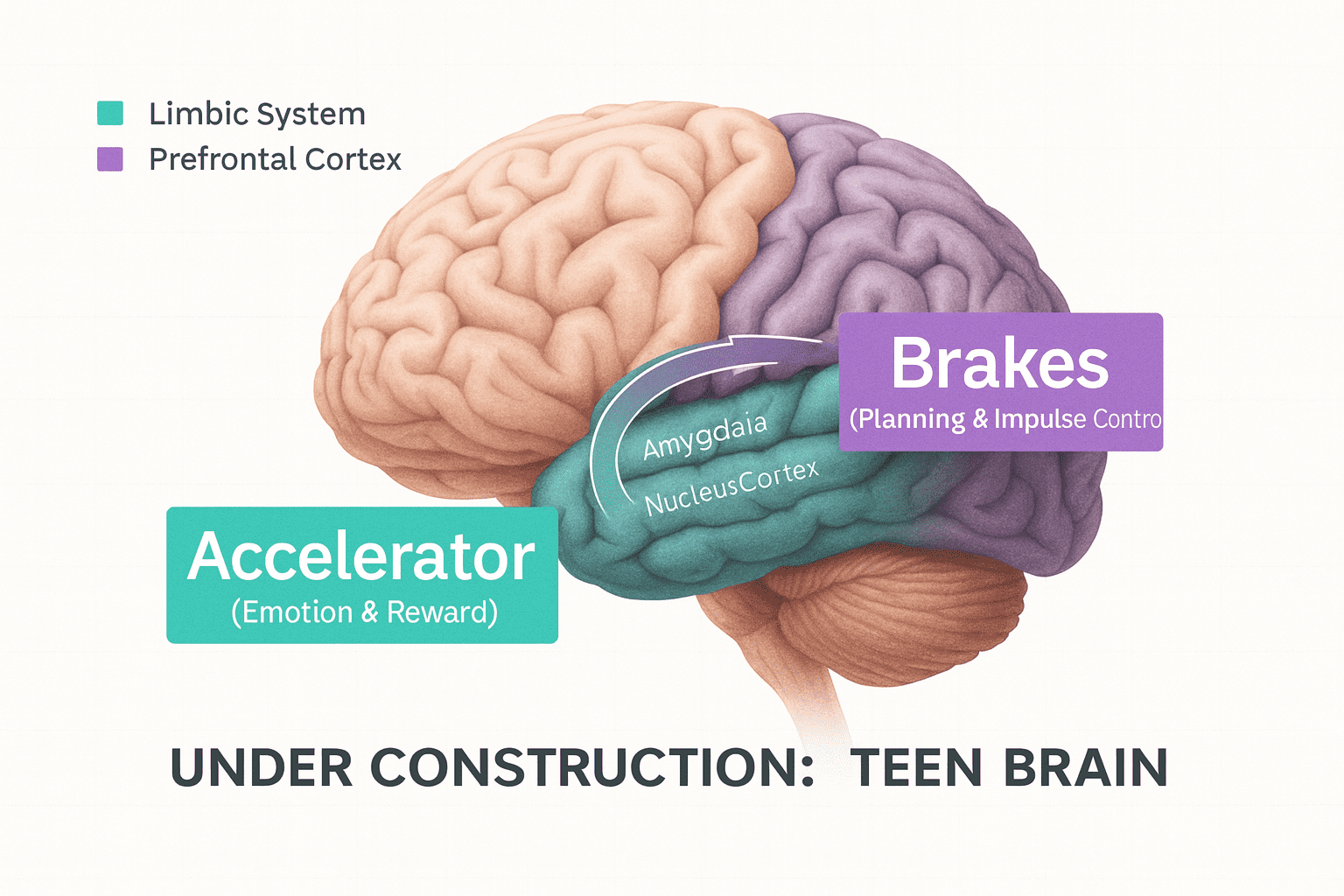
During puberty, the brain’s emotional and reward systems become highly responsive, while the regions that support planning, impulse control and long-term judgement continue to mature well into the twenties. The result is a familiar imbalance: strong feelings, sensitivity to peers and a powerful pull toward novelty, guided by brakes that are still being installed.
This is not a flaw. Heightened sensitivity helps young people learn quickly, form friendships and take the risks that growing up requires. Adult guidance at this stage is not micromanagement; it is a guardrail on a mountain road, protecting the journey without taking the wheel.
Sleep is not a luxury
Puberty shifts the body clock later, so many teenagers are not sleepy until late in the evening. Early school starts then cut into the deepest part of their sleep. What looks like attitude is often sleep debt. Consistent bedtimes and waking times, darker rooms in the evening, morning daylight and screens set aside before bed do more for mood and concentration than most lectures.
Weather and climate: emotions and moods
A helpful distinction for young people is between emotions and moods. Emotions are like weather: brief, linked to events and passing. Moods are more like climate: longer lasting and sometimes without an obvious cause. Learning to say “I feel angry right now” rather than “I am an angry person” separates a passing state from an identity, and that separation is the beginning of self-leadership.
Faces often signal feelings before words do. Noticing a flicker of worry or hurt is an act of attention, not interrogation. A gentle observation works better than a conclusion: “You said you are fine, and you looked a little worried just then. Do you want to talk about it?”
Identity, belonging and acceptance
Working out who one is, including beliefs, interests, friendships and identity, is the central task of these years. Respectful, non-shaming care from adults protects mental health, and research consistently shows that even one reliably accepting adult can change a young person’s trajectory.
Belonging matters just as much. Teams, clubs, service projects, faith and cultural communities give teenagers people who know their names and expect them next week. Belonging replaces isolation with purpose, and purpose is one of the strongest buffers against anxiety and low mood.
Stoic tools that work in a school day
Stoicism teaches the difference between what is within our control, such as effort, attention and values, and what is not, such as other people’s opinions or yesterday’s results. Three short practices translate well to young people:
Rehearse obstacles. Before a test, match or difficult conversation, calmly picture what could go wrong and decide how you would respond. Preparation reduces fear.
The view from above. Zoom out and ask how much this will matter in a week, a month or a year.
Use what happens. Treat a setback as training material: what did it teach, and what will you do differently next time?
Positive Mental Attitude as disciplined optimism
PMA is not pretending that everything is fine. It is choosing the most useful true story about a situation and then acting on it. A poor grade can mean “I am not clever”, or it can mean “my revision method is not working yet”. Only one of those stories leads somewhere. Small daily habits help make this choice automatic: a short gratitude note, a phone-free hour of focused work, and one act of kindness each day, such as a thank-you, a genuine check-in or a quiet favour.

For parents, teachers and coaches: be the lighthouse
Calm is contagious. A slower voice, fewer words and longer pauses lower the temperature of a room.
Connection before correction. Acknowledge the feeling first; solve the problem second. Young people learn from adults with whom they feel safe.
Systems beat speeches. Regular sleep, daylight, movement and shared meals stabilise mood more reliably than advice.
Watch for warning signs. Sudden withdrawal, persistent irritability or hopelessness, changes in eating or sleeping, talk of disappearing or any sign of self-harm call for early action. Stay close, listen without judgement and involve a qualified professional promptly. If a young person is in immediate danger, contact local emergency services.

For a practical summary, download the free Teen Resilience Checklist.
From the book
These ideas are explored in depth in Rising Above: Puberty and Mental Health in Adolescents by Jay Pacheco, which pairs real stories with plain-language biology, emotional skills for everyday life, Stoic calm and Positive Mental Attitude. It is available on Amazon and other major ebook stores.
Conclusion
Adolescence will always contain storms. The aim is not to remove them but to build young people who can steer through them, supported by adults who stay calm, curious and close. With understanding, steady habits and a few well-practised tools, the turbulence of these years can become the place where strength is formed.
This essay is for education and reflection and does not replace professional advice. If you are worried about a young person’s safety or mental health, contact a qualified professional or local emergency services.


Leave a Reply
Want to join the discussion?Feel free to contribute!