

Rewiring Your Mind
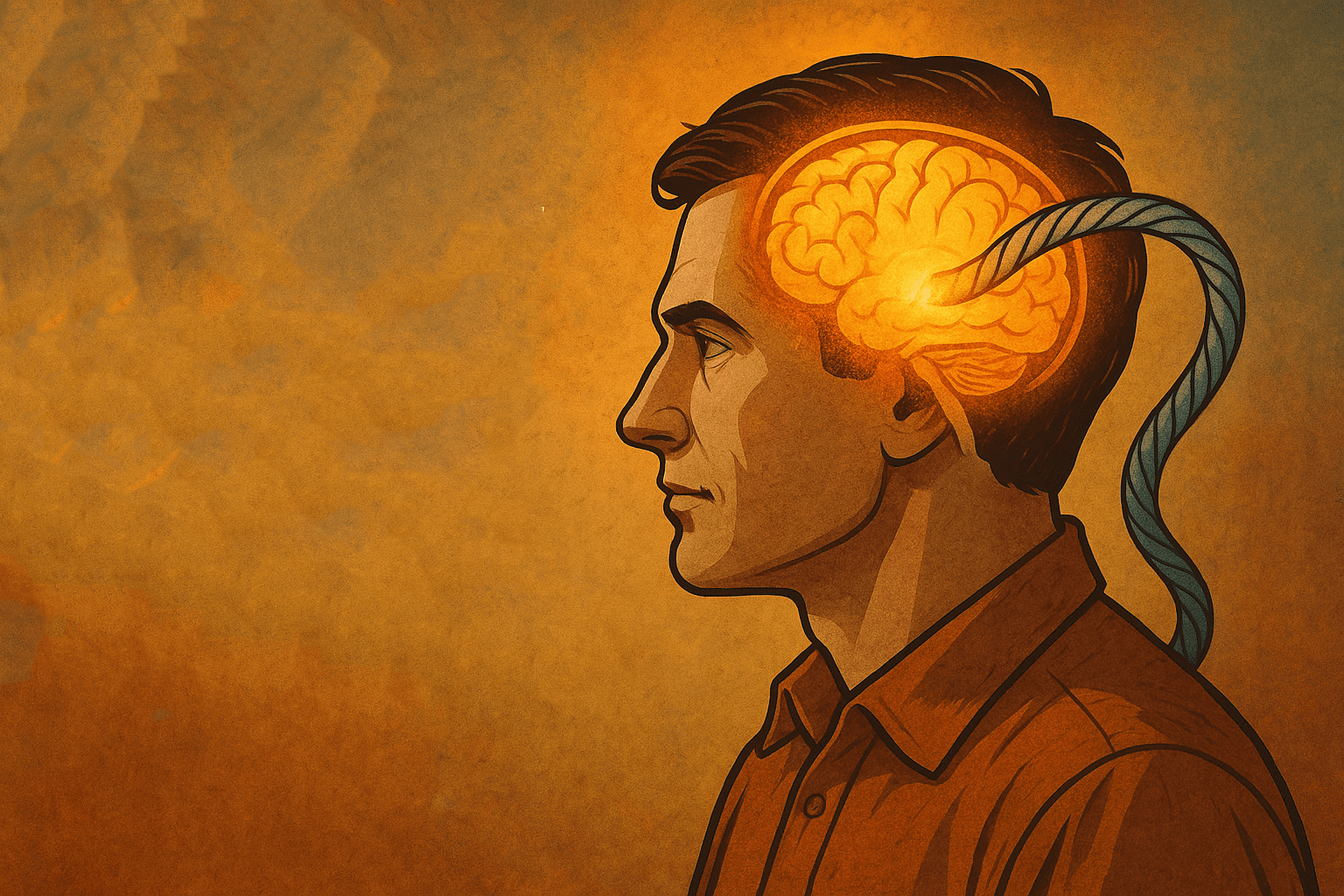
Imagine standing before a blank canvas. It represents your mind: your perceptions, beliefs and expectations. Every day you add brushstrokes, and over time those strokes become the picture of your life. What decides the colours? To a remarkable degree, your mindset.
The science: a brain that changes
For much of the twentieth century, the adult brain was thought to be largely fixed. Research on neuroplasticity has shown otherwise: neural connections strengthen or weaken with use throughout life. The psychologist Donald Hebb proposed the principle often summarised as “neurons that fire together wire together”. Repeated patterns of thought and action become easier to repeat.
The implication is encouraging. If habitual thoughts such as “I am not good enough” or “nothing ever works out” are rehearsed every day, they become well-worn paths. But other paths can be built through practice. A Positive Mental Attitude is not a single decision; it is a set of mental habits strengthened through repetition.
Marcus Aurelius understood this long before modern science: the happiness of your life depends on the quality of your thoughts. The mind is the soil and thoughts are the seeds. The question is what you are planting.
From chains to freedom: Viktor Frankl
Viktor Frankl, a psychiatrist who survived Nazi concentration camps, wrote in Man’s Search for Meaning that everything can be taken from a person but one thing: the freedom to choose one’s attitude in any given set of circumstances. In the worst conditions imaginable, he held on to meaning, even picturing himself one day lecturing about the psychology of the camps.
His example does not suggest that circumstances are unimportant. It shows that, even when circumstances are beyond our control, our response remains our own.
Five practices for rewiring the mind
1. Speak to yourself like a good friend
Your mind hears everything you tell it. Replace “I can’t do this” with “I am learning, and I will find a way”, and “I always get it wrong” with “I am improving with practice”. The Bible offers a similar instruction: “Let the weak say, I am strong” (Joel 3:10).
2. Reframe challenges as training
Instead of asking “Why is this happening to me?”, ask “What can this teach me?” The Stoics, Seneca among them, compared hardship to exercise for the mind. The people who flourish are rarely those who avoid difficulty; they are those who use it.
3. Guard your mental environment
What you consume shapes how you think. Limit constant negativity from news feeds and corrosive conversations, spend time with people who are growing, and fill your attention with books, ideas and music that strengthen you.
4. Practise gratitude as a ritual
Each morning, write three things you are grateful for; each evening, recall one good moment from the day. Studies of gratitude practices report improvements in wellbeing, and over time the habit trains attention to notice what is going right.
5. Rehearse your future self
Mental rehearsal is used by athletes, performers and surgeons because imagining an action engages many of the same brain networks as performing it. Spend a few minutes each day picturing yourself acting with confidence and calm, then let that picture guide one concrete action. Napoleon Hill’s famous line, “Whatever the mind can conceive and believe, it can achieve”, is best read as an encouragement to begin, not a guarantee of outcome.
The final shift: choosing your masterpiece
The most important contest you face takes place in your own mind: between fear and courage, habit and growth. Your mind is not fixed, and your future is not predetermined. With each thought you rehearse and each action you take, you add another brushstroke to the canvas. Begin today.
— Jay Pacheco


Leave a Reply
Want to join the discussion?Feel free to contribute!