My visit to Kristiania Høyskolen: A Journey of Positivity and Inspiration


Kristiania Høyskolen and my Stoic Experience

Visiting Kristiania Høyskolen and Embracing a Positive Mental Attitude and a Stoic Experience

Our ability to overcome challenges and obstacles in life depends on cultivating a positive mental attitude and embracing stoicism. One way to achieve this is by visiting places like Kristiania Høyskolen, where you can immerse yourself in a supportive and empowering environment.

Kristiania Høyskolen, located near Stortinget in Oslo, Norway, is a modern and over 100 years old innovative university that offers a range of programs both online and on campus focused on such as psychology, and other professional programs. With a focus on creativity, entrepreneurship, and a newly constructed-renovated building, the campus provides a unique learning experience.

When visiting Kristiania Høyskolen, you can’t help but be inspired by the positive energy and creative spirit that permeates the campus. From the students to the faculty, everyone seems to be on a mission to make a difference in the world, and this sense of purpose is contagious.

As you explore the campus, you’ll encounter a wide range of facilities and resources designed to support student learning and well-being. From cutting-edge technology in the classrooms to beautiful new coloring spaces for relaxation and reflection, Kristiania Høyskolen has everything you need to thrive.

One of the things that sets Kristiania Høyskolen apart from other universities is its focus on holistic education. The university believes that success in life is about more than just academic achievement. It offers a range of programs and services to support students’ mental, physical, and emotional health.

In this environment, it’s easy to adopt a positive mental attitude and embrace stoicism, but of course stoicism isn’t part of the curriculum. For now, PMA Science University offers stoicism and positive mental attitude (PMA) articles, ebooks and self-learning studies online. Furthermore, at Kristiania Høyskolen you’ll be surrounded by like-minded individuals who share your passion for personal growth and development, and you’ll have access to the tools and resources you need to overcome any challenges that come your way.

In conclusion, visiting Kristiania Høyskolen is an incredible opportunity to cultivate a positive mental attitude and embrace stoicism. Whether you’re a student, a professional, or simply looking to improve your life, you’ll find that the campus offers everything you need to grow, thrive, and make a positive impact on the world.

My visit to Kristiania Høyskolen: A Journey of Positivity and Inspiration

Recently (February 7th 2023), I had the opportunity to visit Kristiania Høyskolen, one of the most renowned higher education institutions in Norway. From the moment I stepped on campus, I was immediately struck by the positive energy and welcoming atmosphere that permeated throughout the school.

As I explored the facilities, I had the privilege of meeting with several members of the faculty and staff, who were all incredibly friendly and passionate about their work. Their positive attitudes and enthusiasm for teaching and learning were contagious. I couldn’t help but feel inspired by their dedication to their students and to the school as a whole.

I also had the chance to meet with the rector of the school, who was equally warm and welcoming. During our short conversation, she shared with me a bit about her vision for the future of Kristiania Hyskolen. She also shared her commitment to creating a positive and inclusive environment for all students and faculty members.

One thing that particularly impressed me about the rector was her focus on fostering a sense of community within the school. She spoke about the importance of creating opportunities for students to connect with one another and with their teachers. This creates a more supportive and inspiring learning environment.

As someone who is passionate about education and the impact it can have on individuals and communities, visiting Kristiania Høyskolen was truly an incredible experience. I’m looking forward to another visit where I hope I can see more of the campus.

I also noticed the positivity and dedication of the faculty and staff. This, as well as the rector’s vision for the future, left me feeling inspired and hopeful for what is to come.

In conclusion, my visit to Kristiania Høyskolen was a testament to the power of positivity and the impact it can have on individuals and communities. The warmth, passion, and dedication of the faculty and staff, as well as the rector’s vision for the future, will stay with me for a long time to come. I look forward to following the continued success of this exceptional institution.

In addition, there are many things you can do with Stoic and the PMA Tools, such as holding a positive attitude and letting things be that you cannot control.

Tell us about your new experiences while visiting inspiring places!

Cheers,
Jay Pacheco

5 STOIC Questions that will improve your mindset and change your life!

In meditating and writing;

Ask yourself:

5 STOIC Questions that will improve your mindset and change your life!

Made me realize that I also needed to answer these questions for myself. In order to accomplish this, I had to do a bit of research. I also had to skim over my previous readings on Stoicism from Epictetus, Seneca and Marcus Aurelius among others.

Stoic & PMA Science Wisdom for Everyday Life. Inspiration & Motivational Writing is the theme of both www.pmascience.com and @pmascience on Instagram.

Under the PMA science platform many other self-development tools can be found, so follow along, get inspired, and most importantly, take action.

Here are the 5 Stoic questions, with some insight for you!

Ask yourself:

5 STOIC Questions that will improve your mindset and change your life!

1. What does my ideal day look like?

2 What is the most meaningful thing?

3. Who do I spend time with?

4. Is this in my control?

5. Is this who I want to be?

Stoic & PMA Science Wisdom for Everyday

Life.


WHAT DOES YOUR IDEAL DAY LOOK LIKE?

“If a man knows not which port he sails, no wind is favorable.” – Seneca

If you don’t know what your ideal day looks like, how are you supposed to make decisions or plans for ensuring that you actually get to experience them on a regular basis?

Seneca’s quote reminds us that a fulfilling life comes from living the most enjoyable and fulfilling days, and from knowing which port to sail to.


WHAT IS THE MOST MEANINGFUL THING?

“First say to yourself what you would be; and then do what you have to do.”– Epictetus

If you don’t know what the most meaningful thing is to you, how could you determine if you’re making it your first priority? How could you know if you’re taking the right steps to get it?

Make a habit of knowing that and don’t deceive yourself. You have to know what is meaningful and own it. Only then can you understand what matters and what doesn’t. It’s just like Epictetus’s quote.


WHO DO YOU SPEND TIME WITH?

“We are the average of the five people we spend the most time with.” – Jim Rhon

This law of averages, which is the theory that the result of any given situation will be the average of all outcomes.

It’s who we spend time with that influences who we become more than any other factor.

The people you spend most time with dictate what you do and what you do dictates who you become. This holds true for what you read, what you watch, what you eat and what you think about.

Your life tends to resemble its environment. So choose your surroundings wisely and disciple yourself to find your own happiness.


IS THIS IN MY CONTROL?

Our control over some things is limited, while others are beyond our control.

Things under our control are opinion, pursuit, desire, aversion, and, in a word, whatever are our own actions. Things under our control are by nature free, unrestrained, unhindered.

Among the things we cannot control are our bodies, properties, reputations, commands, other people and, in other words, anything that is not under our control. These things are weak, slavish, restrained, and belong to others, making us slaves. But our responses to external events are under our control if we know how to respond.

Making this distinction will make you happier, make you stronger and make you more conscious. This is because it concentrates your resources in the places where they matter most to you.


IS THIS WHO I WANT TO BE?

You are the sum of what you do daily, and who you spend time with, so ask yourself whenever you’re doing something: Is this reflecting the person I want to be? What do I see myself to be?

How we do anything is how we do most of everything. That is how society thinks we are, and it tends to be true. So ask yourself the above questions about every action, thought and word. A self-image or belief cannot replace this, because it adds up.

I hope you enjoy answering the 5 Stoic questions and please share your progress or share this post with someone who you think can benefit from it.

Cheers,
Jay Pacheco


The Art of Discovering and Maintaining Joy in Your Life

Today, most people are searching for happiness, and I admit that at some point I was also searching for happiness. Until I hit the wall (Jeg truffet veggen) as Norwegians say when they are under a lot of stress and cannot cope with it anymore. The truth is that I have hit many walls in my life, although it has only been within the last 2-3 years that I have begun to understand what happiness and joy are, after using discoveries by my own curiosity to heal myself through Stoicism and the Positive Mental Attitude (PMA) tools.

Over the past few years, I have conducted some personal research by reading a number of books on psychology, stoicism, philosophy, self-help, PMA Science of Success, Sumerian and Acadian records, as well as biographies of other well-known people who have experienced similar setbacks as myself and who now own businesses, as well as watching television interviews about happiness and joy. Both in the past and recently, I asked people what joy and happiness meant to them. Many people talk about their children, their jobs, their cars, their careers and the list seems endless. However, very rarely do I come across one of them who tells me that happiness is what they breathe every day. Someone like this has hit the wall very hard and is grateful.

In short, one of the popular concepts in today’s culture is passion. It is all-too-common to hear voices in our culture argue that finding and securing passion is the end goal of a purposeful life.

Could that be a lie?

Let’s take a moment to consider the ancient Stoics with their positive mental attitude (PMA).

The Stoics disagreed. Why? Because the end goal of Stoicism was a virtuous life—and “passion,” as understood in their time, was a threat as it still is in our times if not understood correctly. The Stoics listed four passions that every philosopher should avoid. They were: Distress, Fear, Lust and Delight.

Moreover, they believed that passions were what contributed to our misery. To the experts and today’s gurus, TV experts, and psychologists who assure us that passion—that unbridled enthusiasm, that willingness to pounce on what’s in front of us with the full measure of our zeal—is our most significant asset, Seneca being the wealthiest person during his time, and after losing everything and being exile 2-3 times would ask, “how can such wavering and unstable persons possess any good that is fixed and lasting?

This man understood the meaning of happiness and joy, and I know there are lots of us who also understand what Seneca meant.

So what should we pursue?

Where do we find joy?

And how do we keep it?

Seneca’s answer comes in his letter, On the True Joy which Comes from Philosophy:

“It comes from a good conscience, from honorable purposes, from right actions, from contempt of the gifts of chance, from an even and calm way of living which treads but one path…There are only a few who control themselves and their affairs by a guiding purpose; the rest do not proceed; they are merely swept along, like objects afloat in a river. And of these objects, some are held back by sluggish waters and are transported gently; others are torn along by a more violent current; some, which are nearest the bank, are left there as the current slackens; and others are carried out to sea by the onrush of the stream. Therefore, we should decide what we wish, and abide by the decision.”

Unshakeable joy comes from purpose. We saw at the beginning of this piece that facing the wall is unshakeable, and if we learn something from it, then we will understand what joy really means.

In something far larger than yourself. In perspective and gratitude. In the wisdom that Stoicism teaches us. It might not be as exciting or glamorous as you might expect. It might be a bit slower. But it’s far more durable and meaningful.

The Stoics believed that reason was the antidote to passion—whether it was taking its form in envy, timidity, excitement, obsession, or pride. The Stoics strove to live “in agreement with nature”, and “reason” was nature’s most precious gift, so living by nature meant, first of all, living by reason.

In line with The Stoics and Napoleon Hill, self-seeking, cowardice, grief, and all other negative emotions can only enter the mind with the consent of own reason.

Stoicism and a Positive Mental Attitude (PMA) both provide techniques for maintaining alertness of the mind if one wants to keep evil emotions at bay.

Another set of tools used by clinicians today is Recovery-Oriented Cognitive Therapy (CT-R) and Cognitive Behavioral Therapy (CBT), among others.

As a result, Albert Ellis and Aaron T. Beck helped develop Cognitive Behavioral Therapy, which was derived from the Stoics, and Stoicism isn’t well known to most psychologists today.

What is promised in return is no less than freedom from passion—a word associated with the classical notion of suffering and passiveness. With enough practice, passions can be exiled from the citadel of the self. Neither unhappiness nor misfortune can touch you when you control your passions. Once you are free of your passions, you are independent of the world, possessing an unshakable sense of contentment.

Finding joy will take work, discipline, and self-reflection. But it’s in there. It has always been inside you. Dig deep. Find it.

In conclusion, finding happiness and joy begins with finding your life’s purpose. When you know this, joy and happiness follow because they come from deep within you.

In order to maintain happiness or joy, you need to maintain a positive mental attitude (PMA) at all times. The Stoics of ancient times did the same thing, so we can too.

When you discover your purpose, joy comes along. With a stoic attitude and a positive mental attitude, you’ll have joy you’ll cherish for the rest of your life.

What is joy and happiness for you?

Cheers,

Jay Pacheco

Stoic way to heal Yourself, by spending time in Nature

Even the most anti-outdoorsy type has to admit that they feel calmer when they smell the fresh air and see the sunlight filtering in through the leaves. It fills us with a sense of comfort and relaxation.

Not only does it make us feel happy, but it also heals us from the inside out. It shows in how we think more clearly and how our moods are restored when we’re around nature.

Continue reading to learn more about how to heal yourself by visiting nature more often.

Why Do We Feel Blessed When We’re in Nature?

Getting back to nature acts as a reminder that we’re all part of the natural world called the earth. We’re all connected somehow, which is why you feel at peace when you’re in a quiet forest or by the seashore.

Think of when you walk barefoot on the beach or a patch of green grass. You know that pleasant feeling you get? The setting makes you feel like you’re in a quiet garden house, comfortable, relaxed, and at ease.

And the most rewarding part is all the stress and tension you’ve been holding onto melts away somehow. It’s like a weight has been lifted off your shoulders, and you feel freer and lighter.

How Can We Reconnect with Nature?

Finding opportunities to reconnect with nature and take advantage of its healing benefits can be a challenge in our hectic lifestyles. Yet, you don’t have to be camping in the middle of nowhere to enjoy nature. Instead, there are ways you can do just that right from the comfort of your own home.

Take a look.

Gardening

Don’t lose hope if you’re not into hiking or camping outdoors. You can still be close to nature but in a different way.

For example, depending on the season, you could plant a vegetable garden both inside, or outside your home. Tending to plants allows you to spend a good deal of time with nature and connect with mother earth.

You get to breathe in the fresh smell of the soil and the plants themselves. But, of course, it’s even more enjoyable if you’re planting fragrant plants, such as jasmine, roses, or lilies during the spring and summer.

You also get to connect with nature in a hands-on, visceral way that, for some people, can become very personal. In fact, many gardeners have said that when they were tending their gardens, they felt a deeper bond with nature they hadn’t felt before.

Many also feel that gardening makes them feel like they’re part of something much larger than themselves. This special connection allows them to bridge the gap between our hectic, modern human world and the natural world.

Mindfulness Meditation

Being outdoors is such a wonderful opportunity to slow down and breathe. Look around and see all the colors around you. Take in how the light plays through the leaves or reflects off a big, shiny rock.

Next, close your eyes and take a deep breath. Inhale as much fresh, clean air as you can to cleanse your lungs of the smog and fumes we’re so used to taking in.

During the summer, stop and listen. Take the time to listen to the birds and crickets chirping, as well as any other creatures, big or small.

During the winter if it snows, go out and enjoy the snow. If you live in a place where there is no snow in the winter, still step outside and breathe in the fresh air and listen to the wind.

Also, if there’s a brook or stream nearby, pay close attention to the sound of the water. Studies show that the sound of running water is calming and can even have an antidepressant effect.

Yet, the most valuable thing to listen for in nature is nothingness. That calm, peaceful feeling has become so rare that we sometimes don’t know just how much we miss it.

Forest Bathing

Forest bathing,’ or ‘shinrin-yoku’ in Japanese, is the art of moving slowly and mindfully through a forest. The aim of this Asian practice is for you to engage all five senses along the way.

So, with each step, you take in all the sights, sounds, and smells of your surroundings. This experience is similar to mindfulness meditation, which we mentioned above.

Yet, it offers benefits beyond stimulating the parasympathetic nervous system or reducing your stress levels. (Your parasympathetic nervous system is a network of nerves that relaxes your body after periods of stress or danger. It also helps run life-sustaining processes, like digestion, during times when you feel safe and relaxed.) Forest bathing also helps increase anti-inflammatory properties in your body and boost your immune system, all thanks to the terpenes you inhale as you’re walking through the forest.


Continuation in a stoic way…

More and more people are starting to realize that the most natural way to heal themselves is by getting back to nature. It’s true that the more time we take to relax and unwind in nature, the better off we’ll be.

The stoic way

One more thought, and this one is from Epictetus, Enchiridion ch. 4. A Stoic who reminds us to bathe in accordance with nature, since we are all part of the natural world.

“Remind yourself what the nature of that activity is. . . . [S]traightaway say to yourself “I want to bathe and at the same time maintain my faculty of choice in accordance with nature”. . .  For in this way, if anything that hinders you from bathing happens to arise, you will have ready at hand the saying “Well, this was not the only thing I wanted, but also to keep my faculty of choice in accordance with nature; and I won’t keep it [in that way] if I get upset over the things that occur.”

In order to heal properly, we should spend more time in nature because, if we choose to, it is one of the fastest ways.

I encourage you to spend time in nature, whether it’s in the woods or by the seashore!


Share, How do you heal yourself in nature?

Cheers,

Jay

3 Stoic Disciplines


1. PERCEPTION

Good or bad can only be perceived by oneself, based on what we can or cannot control in our minds and behaviors.

Epictetus famously said, “It’s not things that upset us but our judgments about things.”

As well as the event itself, there is also the mental repeated story we tell ourselves about what it means and how to cope with others’ behaviors.


2. WILL

Endure and bear what we can and must.

Marcus Aurelius said: “A blazing fire makes flame and brightness out of everything that is thrown into it.”

Treat each and every moment – no matter how challenging – as something to be embraced, and grown, not avoided. To not only be okay with it, but love it and become better for it. In this way, obstacles and adversity become fuel for your potential, like oxygen for a fire.


3. ACTION

Zeno said that well-being was realized in small steps.

Seneca said that Stoicism was about acquiring one thing every day, and that’s it.

Marcus Aurelius said it was building your character action by action, every day.

It’s not glamorous, but with time and energy, we can make progress if we decide to be disciplined by stoic tools.


Cheers,
Jay


Want more Stoic inspiration? Follow us:

https://pmascience.com/pma/articles/stoicism/

25 Habits That Will Guarantee Your Mental Success

PMA Science of Habit

Blog Bonus: 25 Habits That Will Guarantee Your Mental Success

The ancient Stoics were fond of an expression: You make character your fate.

It means that character is deterministic, that who you are determines what you will be and do. Of course, if you choose to determine your character.

Self-discipline is one of those special things that is both predictive and deterministic if chosen. It both predicts that you will be a success, AND it makes whatever you are doing worthwhile. It is not a means to an end. It is not just something we value until we get something we think we might really value,

—this job title, that amount of money, winning the lottery, landing the most desirable job opportunity.

No.

Discipline, and self-discipline is the win.

When you are disciplined about your purposes…you win. When you are disciplined and believe in yourself…you win. When you know you have put your heart into something, you will succeed. When your self-worth is tied to things you can control (effort and a positive mental attitude, for example)…you win.

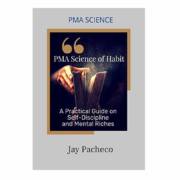
This is what I mean when I say, as I titled my book, PMA Science of Habit. Who we are, the standards we hold ourselves to, the things we do regularly—in the end, these are all better predictors of the trajectory of our lives than things like talent, resources, or anything else. So here, are some extra bonus keys that I should have included in my book: PMA Science of Habit : A Practical Guide to Self-Discipline and Mental Riches. Several of the following 25 habits weren’t included at the time I wrote my book. This is because I didn’t know much about stoicism, though these 25 habits will put you ahead on the most positive trajectory possible.


1. Attack dawn and sleep.
According to research conducted on most athletes at the gym, firefighters, and several business owners, the morning hours are the most productive. “Because in the morning, you are free” most of them said, and Dwayne Johnson talks on YouTube about how he attacks dawn because during early time, there was, “no one to disturb you and it is cool or cold and you come to your work out and be ready for the day.”

Sleep is also a very significant part of life to maintain a healthy body and mind. The majority of successful people tend to sleep early in order to maintain sound health or in order to have a very productive day the next day.


2. Journaling and Gratitude

Daily journaling for 3 – 5 minutes is the easiest thing you can do to start and end the day on a positive note.

Is the physical act of daily journal writing that impacts physical brain activity and function across a multitude of powerful dimensions within your mind.

Every successful person I have talked with, I have learned that they journal every morning and night. Either be a doctor, a person that trains very often at the gym, a business owner, or a person with a management position. They write down their ideas, their plans, their thoughts, their gratitudes and the most prominent example we have today are Meditations by the Roman Emperor Marcus Aurelius.

Why write a book no one would see? Why create a handbook if you are not planning to publish it?

“Because I needed it to keep me in my path.” -Marcus Aurelius


3. Reading opens the imagination.

Most people do not open or touch a book after they leave high school or college. The reading I’m talking about here is self-help, biographies, and psychology books for example. The government expects students to study in school in order to become employees rather than thinkers. That’s why most people don’t read after they graduate from school. And because of that, most people don’t really like to learn after so many hours of studying during their school years. The few people that read, is mostly because they have goals and want to pursue them. They might want to become leaders in their fields at work, want to be doctors, business owners, world champion athletes, -or just want to self-develop and grow mentally for example.

Due to their reading interests, Nikola Tesla and Leonardo DaVinci inventions came to mind. If they hadn’t read, we probably wouldn’t have today’s technologies. Consider alternate current in our homes, wireless communication, magnificent bridges, or the Mona Lisa and Elons Mulsk electric cars.


4. Quit being a slave. On an ordinary afternoon in 1949, the physicist Richard Feynman was rushing about his business when he felt a pull to have a drink. Not an intense craving by any means, but it was a disconcerting desire for alcohol. On the spot, Feynman gave up drinking right then and there. Nothing, he felt, should have that kind of power over him. At the core of the idea of self-mastery is an instinctive reaction against anything that masters us. We have to drop our unproductive habits. We have to quit being a slave—to cigarettes or soda, to likes on social media, to too much junk food, to unmotivational work, or your lust for power. The body, and mind can’t be in charge. Neither can the habit. We have to be the boss. For the same reason that “we have a body and mind”, and we can control to a certain point.

Napoleon Hill tells us in the book Think and Grow Rich that if you make up your mind to quit, you will win. That’s a tremendous attitude and habit. -just as Richard Feynman did.


5. Just be about the work.
Before he was a big time comedian, Hasan Minhaj was asked if he thought he was going to make it big. “I don’t like that question,” he said. “I fundamentally don’t like that question.” Because the question implies that doing comedy is a means to an end—the Netflix special, selling out the stadium, doing this, getting that. “No, no, no,” he said, “I get to do comedy…I won. It being predicated on doing X or being bigger than Y—no, no, no. To me, it has always been about the work. I’m on house money, full time.”

The words of Hasan Minhaj described above show how a positive mental mindset can work when one has a desire to dedicate oneself to the work.


6. Manage the load. “Absolute activity, of whatever kind,” Goethe said, “ultimately leads to bankruptcy.” No one is invincible. No one can carry on forever. We are all susceptible to what the American swimmer Simone Manuel has helped popularize: Overtraining Syndrome. Even iron eventually breaks, or wears out.

In writing some of my books, training, reading and holding a “common job” I have come to the conclusion that there have been several times when my body just ached and did not want to respond. The signs have told me that I need to rest and manage the load.

7. Do the challenging things first.
The poet and pacifist William Stafford put forth a daily rule: “Do the most difficult things first.” Don’t wait. Don’t tell yourself you’ll warm up to it. Don’t tell yourself you’ll get this other stuff out of the way and then…No. Do it now. Do it first. Get it over with.

Having to do the difficult things first can be unpleasant and challenging, but Elon Musk and Dwayne Johnson are known for persevering to achieve their goals.

8. The main thing should remain the main thing“I wish I knew how people do high quality and long sustained work and still keep all kinds of other lines going–social, economic, etc,” John Steinbeck once wrote in the middle of the long grind of a novel. The truth is, they don’t! It is impossible to be committed to anything–professionally or personally–without the discipline to say no to all those other superfluous things.

9. Make small progress each day.
One of the most helpful rules I’ve heard as a writer is that the way to write a book is by producing “two crappy pages a day.” It’s by carving out a small win each and every day—getting words on the page—that a book is put together. Hemingway once said that “the first draft of anything is crap,” and he’s right (I actually have lots of notes both in my journals and iPhone notes as a reminder to get inspiration at given times).

10. Be kind to yourself.

The Stoic philosopher Cleanthes was once walking through the streets of Athens when he came across a man berating himself for some failure. Seeing how upset he was, Cleanthes–normally one to mind his own business–could not help himself but to stop and say kindly, “Remember, you’re not talking to a bad man.” Discipline isn’t about beating yourself up. There’s a firmness involved, for sure. Ultimately, after a lifetime of study of Stoicism, this is how Seneca came to judge his own growth—“What progress have I made?” he wrote. “I have begun to be a friend to myself.” It is an act of self discipline to be kind towards oneself. To be a trustworthy friend. To make yourself better. To celebrate your progress, however small. That’s what friends do.

11. Bring distinction to everything you do. Plutarch tells us about a general and statesman in Greece named Epaminondas who, despite his brilliance on and off the battlefield, was appointed to an insultingly minor office in Thebes responsible for the city’s sewers. In fact, it was because of his brilliance that he was assigned the role. A number of jealous and fearful rivals thought it would effectively end his career. However, rather than reacting with fury or despair at his insignificance, Epaminondas embraced his newly acquired job with a full heart. According to him, the distinction of the office does not come to the man, but the man brings it to the man. With discipline and earnestness, Plutarch wrote, “he proceeded to transform that insignificant office into a great and respected honor, even though previously it had involved nothing more than overseeing the clearing of dung and the diverting of water from the streets.”

12. Practice.
The wonderfully curious economist Tyler Cowen has come to ask greats of various fields some version of the question: How do you practice your scales? What drills or exercises make you better at what you do? If a person wants to get better, wants to continue to develop and polish, they must know the answer to that question.

Jim Rhon said “Motivation is what gets you started. Habit is what keeps you going.” And the only way to maintain positive habits is through practice.

13. Be harsh on yourself. “Take the cold bath bravely, ‘’ W.E.B Dubois wrote to his daughter. “Make yourself do unpleasant things so as to gain the upper hand of your soul.” By being stern with ourselves, it makes it less likely for others to be harsh on us. By being our own tyrant, we take away the power of tyrants over us.

The virtue of being strict on oneself doesn’t mean being negative, but rather being disciplined and postponing gratification for virtues.

14. Look at everything in a calm and mild light.

When things seemed to be at their peak, Abraham Lincoln always relied on mantras or tools to calm himself. During his presidency he often used methods such as:

“Some of the wisest of men have called anger a short madness: for it is equally devoid of self control, regardless of decorum, forgetful of kinship, obstinately engrossed in whatever it begins to do, deaf to reason and advice, excited by trifling causes, awkward at perceiving what is true and just, and very like a falling rock which breaks itself to pieces upon the very thing which it crushes.” -Seneca

And

“Whenever you get angry, Caesar, do not say or do anything before repeating to yourself the twenty-four letters of the alphabet.“

— Athenodorus

And wrote himself letters of his frustration. After drafting the letter, he read it, sealed it, and did not mail it. Instead, he just put it in his drawer.

After a few hours had passed, Lincoln came back to open up the drawer, take out the letter, and read it again. Most of the time, he found that his anger had abated. There was no need to send the letter, or to keep on being angry. The time in between writing the letter, and then reading it again cooled him down. In that way he could “attend to the matter with a clearer eye”.

15. Stay in the saddle. There is an old German word sitzfleisch which means basically sitting your butt in the chair and not getting up until the task is complete. Even as it feels numb, even as one by one, the people around you call it a day. Showing up yourself, day after day, until your back aches, your eyes water, and your limbs turn to mush. Many a brave conqueror in the days of horseback were called “Old Iron Ass” for their ability to stay in the saddle.

Napoleon Hill called it in PMA Science of Success “Definite of Purpose and Going The Extra Mile”. This means completing your main objective and performing above and beyond what you’re paid for. Even if you don’t get noticed at your current job, eventually your attitude will speak for you, and you will be noticed and appreciated.

16. Get back up when you fall.
It’s wonderfully fitting that in both the Zen tradition and the Bible, we have a version of the proverb about falling down seven times and rising up eight. Even the most self-disciplined of us will stumble. Marcus Aurelius said it was inevitable to be jarred by circumstances. However, the key was to get back the rhythm as quickly as possible, to come back to yourself, rather than giving in.

As Darren Hardy advises in The Compound Effect, ask yourself how long it will take for you to recover from a stressful situation: 20 days, 2 weeks, 2 days, 2 hours, or 20 seconds?

In other words, every human walking today felt a lot as a child and still does from time to time.

17. Find your comrades. The Spartan lawgiver Lycurgus introduced the common mess hall and required that all citizens eat together. It was difficult to eat more than your fair share, more than your healthy share, when you were surrounded by your comrades in battle.

Above all, be a comrade!

18. Be a tiny bit deaf. We have to develop the ability to ignore, to endure, to forget. Not just cruel provocations from jerks, but also unintentional slights and mistakes from people we love or respect. “It helps to be a bit deaf,” was the advice that Ruth Bader Ginsburg was given by her mother-in-law. It helped guide her through not just 56 years of marriage, but also a 27-year career on the court with colleagues she adored, but disagreed with on a regular basis.

Being a tiny bit deaf is more about looking for the good in every situation rather than feeding the ego as is a custom in today’s world.

19. Speak little.
Robert Greene puts it perfectly: “Powerful people impress and intimidate by saying less.” They have the discipline and this discipline creates a powerful presence.

Zeno put it beautifully, “We have two ears and one mouth, therefore we should listen twice as much as we speak.”

It’s isn’t easy, though achievable!

20. Focus. Ludwig van Beethoven was known for drifting off in social conversations. Are you even listening to me, a friend once asked. Sorry, Beethoven replied, “I was just occupied with such a lovely, deep thought, I couldn’t bear to be disturbed.” They called this his raptus. His flow state. His place of deep work. His intense periods of concentration. The source of his musical greatness. We can all develop this skill. As Steve Jobs, speaking to his top designer Jonny Ive, would explain, “focus is not this thing you aspire to…or something you do on Monday. It’s something you do every minute.”

21. Slow down. There’s a difference between hustling (starting your own business, learning new skills, writing a book…) and hurrying. They like to say in the military that slow is smooth and smooth is fast. In ancient Rome, the phrase was festina lente. That is, to proceed slowly. Energy plus moderation. Measured exertion. Eagerness, but under control. Just as Ryan Holiday quotes the poet Juan Ramon Jimenez “Slowly,” “you do everything correctly.”

22. Be strict only with yourself. It was said that the true majesty of Marcus Aurelius was that his exactingness was directed only at himself. He found a way to work with flawed people, putting them to service for the good of the empire. He searched them for virtues which he celebrated, accepting their vices, which he knew were not under his control. Tolerant with others, he reminded himself, strict with yourself.

23. Get the simple things right. Dating back, perhaps to time immemorial, is the poem and proverb about a horse. “For want of a nail, the shoe was lost,” it begins. As a result of the shoe, the horse was lost. Due to the horse, the rider, and due to the rider, the message, and due to the message, the battle, and due to the battle, the kingdom. For want of a nail, the kingdom was lost. Because of poor discipline, everything was lost. Save yourself. Save the world. Get the simple things right.

24. Beware of perfectionism.

Don’t try to be a perfectionist, because you’ll never beat Mother Nature. As Churchill said, another way to spell “perfectionism” is p-a-r-a-l-y-s-i-s. Again, it’s okay to have high standards but all virtues become vices if taken too far. An obsession with getting it exactly right misses the forest for the trees–because ultimately the biggest miss of the target is failing to get your shot off.

25. Do your finest. In an interview with Admiral Hyman Rickover for a chance to join the nuclear submarine program, a young Jimmy Carter was asked how he ranked in his class at the Naval Academy. “59th in a class of 840 sir,” Carter replied with pride. Rickover followed up with, “Did you always do your best?” Carter began to instinctively answer that of course he always did his very best, but something inside of him caused him to pause and reconsider. “No, sir, I didn’t always do my best.” Rickover didn’t say anything and just looked at Carter for a long time. Then he stood up, asked one final question, “Why not?”, and walked out of the room.

__

The Stoics believed that, in the end, it’s not about what we do, it’s about who we are when we do it. They believed that anything you do well is noble, no matter how humble or impressive, as long as it’s the right thing. That greatness is up to you—it’s what you bring to everything you do.

Temperance, as Cicero claimed, can be the fine polish on top of a prosperous life.

It’s not a palace or a throne that makes someone impressive, the Stoics would say, but kingly behavior that does. It’s discipline, self-control. He wasn’t after power or status, he said, but, “perfection of character: to live your last day, every day, without frenzy or sloth or pretense.” He was after becoming the most polished version of himself possible, putting a fine polish on top of everything he did, no matter how humble or impressive.

In Habits section, PMA Science of Success, 1928, Napoleon Hill said that even with 24 hours in a day, anyone can succeed in any pursuit they set their minds to by using the hours left over after work and before sleep. And after a closer examination, I have found out that it’s very true. That is how Peter Stordalen, and Kjell Inge Røkke – two Norwegian entrepreneurs – have built their emporiums among others.

The aim of PMA Science of Habit is to teach you how to harness the powers of self-discipline. The Stoics believed that we are all born to fulfill a meaningful destiny. The pursuit of everyone’s destiny can be achieved with self-discipline and self-control, even though not everyone’s destiny is the same. In PMA Science of Habit, you will learn how to fulfill yours.

Because we’d like to encourage you to master Self-Discipline right now, this blog was put together for you!

Cheers,

Jay

Psychology: How to Silence Your Inner Critics


What do you say when you talk to yourself?

According to psychology, most people have a chatting inner voice. Everybody experiences it, but not everyone has inner speaking. It can be helpful to think of the aroma of fresh coffee before starting one’s morning ritual, for example. They may also practice a potentially contentious conversation with a colleague at work or with a partner at home.

Psychology professor Russell Hurlburt estimates that 30 to 50 percent of people have an inner monologue narrating their thoughts throughout the day.

And neuroscientist and author of Chatter, Ethan Kross, if used correctly, our inner voice helps us access our positive working memory so we can:

  • Better control our behavior

  • Be aware of present moments

  • Better planning for the future

  • Make sense of the complex inner and outer worlds around us

The wrong use of this inner voice can also be destructive, like when we:

  • Catastrophize problems

  • Get stuck in irrational thought loops from the past

  • Obsess over unlikely scenarios

  • Thinking too much about what others think

Usually, this kind of negative self-talk is sparked by adversity or other stressful situations, and the difficulty of understanding one’s own emotions.

Kross refers to this kind of inner voice as chatter. He warns that it can be harmful to our relationships, our work, and even our physical, and mental health.

A few things I appreciate about Kross’s approach, however, is that he doesn’t simply write off our inner voice as being wholly destructive, like many others. His view and approach is more balanced and acknowledges that our inner voice might have evolved for a personal or environmental reason. It can be both an asset and a liability.

The following are four strategies for dealing with your destructive inner voice from Kross’s book, Chatter: The Voice in Our Head and How to Harness It:

1. Pretend you are advising a friend

Negative mental chatter is often brought about by adverse events. When we are in the middle of a crisis, it’s often difficult to think logically about our situation.

However, most of us can usually offer level-headed advice to a friend struggling through a challenge, partly because we’re not as emotionally invested in such a friend.

By pretending to be that friend, you can get some distance from your disturbing problem, helping you to view it more objectively.

2. Write down your thoughts

Simply putting your unfiltered thoughts down on paper will allow your mind to get some distance from them and process them more effectively.

You can even build a habit of doing this daily first thing in the morning or evening as a kind of preventative maintenance.

Journaling is a very simple and effective method that will help you to remove stressful thoughts when written down.

3. Broaden your perspective

Mental chattering often happens when we zoom in, and focus on one part of a problem, inflaming our emotions and losing any sense of creative solutions.

Instead, try zooming out by taking a walk or doing some exercise. Ask yourself if the issue you’re dealing with at hand will still be a problem in 20 minutes, a day, a week, a month, a year, or longer.

4. Get into Gratitude

When we experience something vast and indescribable, we experience a shrinking of the Self, and core feelings.

Interestingly, when we feel smaller, so does our mental chatter. Being grateful brings the emotions that underlie these kinds of experiences to awe and it has been shown to help calm our nervous systems and increase mindfulness.

“For when I am weak, then I am strong” (2 Corinthians 12:10) Paul is strongest when he is weak because he is most grateful for God’s grace when he is weak.

I hope these simple strategies can help you harness the chatter of your inner voice.

How do you deal with your inner mental chatter?

Cheers,
Jay


Napoleon Hill’s 13 Steps to Success from Think and Grow Rich (1937)

Napoleon Hill never dreamed that an interview with Andrew Carnegie, an industrialist and steel magnate, would change his life. Nor could he predict that his book Think and Grow Rich (1937) would change the lives of so many people who yearned to experience success.

Carnegie encouraged Hill to collect the stories of the country’s greatest business leaders and entrepreneurs. He promised to introduce Hill to the wealthiest and most successful people he knew if Napoleon committed 20 years to document their stories of success.

Throughout the next two decades, Hill met with more than 500 self-made millionaires, including Theodore Roosevelt, Thomas Edison, John D. Rockefeller, Henry Ford, and Alexander Graham Bell. Carnegie believed “the man who knows exactly what he wants has no difficulty believing in his own ability to succeed.” This definiteness of purpose became the foundation of Hill’s book, Think and Grow Rich, and his professional focus throughout the rest of his life.

Business Insider explains that Hill did not focus on money, wealth, finances, or stocks; he focused instead on “breaking down the psychological barriers that prevent many people from finding their own fortunes.”

Hill insisted, “What the mind of man can conceive and believe, it can achieve.” He summarized the common attributes shared by successful men and women into 13 steps.

  1.  Desire: You have to want it.

Hills explains that prosperous individuals have a strong desire for success. They dream, hope, and plan for success long before they experience it. They did more than want wealth to accumulate in their bank accounts – they expected it.

Wishing will not bring riches,” said Hill. “But desiring riches with a state of mind that becomes an obsession, then planning definite ways and means to acquire riches, and backing those plans with persistence that does not recognize failure, will bring riches.

  1.  Faith: Believe that you can achieve your goal.

Growing rich begins with a positive mindset. Faith in one’s ability to attract wealth is a necessary requirement for attracting it.

“Riches begin in the form of thought!” insisted Hill. “The amount is limited only by the person in whose mind the thought is put into motion. Faith removes limitations!

  1.  Auto-suggestion: Use affirmations to reach your goal.

The success you want transforms into reality when you fill your subconscious mind with positive phrases and mantras that reflect your goals. Hill said, “You have to repeat out loud what it is that you want and how you plan to get it so you become obsessed with your purpose.”

Hill wrote, “Your ability to use the principle of auto-suggestion will depend, very largely, upon your capacity to concentrate upon a given desire until that desire becomes a burning obsession.”

  1.  Specialized knowledge: Gain experience and continue learning.

Many known tycoons have agreed that knowledge is power, but only when individuals apply what they learn to solve problems in their daily lives. Mr. Hill believed successful men and women are committed to lifelong learning instead of short-term goals. This is especially relevant in this technological era where information is always changing.

  1.  Imagination: Be open to creative ideas and visualize your success.

Visualization lets you imagine the desired outcome or what you want to see manifest in your life. This practice allows you to “see” yourself experiencing success through the power of imagination. Visualization is a mental rehearsal of success; it is a technique of performance improvement consistently supported by scientific evidence and used by many successful people across professions.

Hill maintained, “If you can imagine it, you can create it.”

  1.  Organized Planning: Take action.

The process of visualization allows you to imagine the success you want to experience. However, you will not experience it until you relentlessly do the work to transform what you want into reality.

“Opportunity has spread its wares before you,” said Hill. “Step up to the front, select what you want, create your plan, put the plan into action, and follow through with persistence.”

  1.  Decision: Defeat procrastination with decisiveness.

Hill believed successful people do not procrastinate. They know what they want – and they get what they want because they are decisive. “Decision is not just a trait of the wealthy,” explained Hill, “but one of the most significant qualities a leader needs to possess.”

Hill wrote, “People who fail to accumulate money, without exception, have the habit of making decisions slowly and of changing these decisions quickly and often.

  1.  Persistence: Don’t stop until you get what you want.

Persistence demands willpower. Successful men and women believe challenges are critical directional arrows that lead them closer to their goals. They are not distracted by setbacks and disappointments.

“Riches do not respond to wishes,” wrote Napoleon Hill. “They respond only to definite plans, backed by definite desires, through constant persistence.”

  1.  Power of the Mastermind: Surround yourself with successful people.

Hill explained that the most successful people surround themselves with talented friends and colleagues who share their vision. Hill added, “The alignment of several smart and creative minds is exponentially more powerful than one.”

Hill described a Mastermind group as “a friendly alliance with one or more persons who will encourage one to follow through with both plan and purpose.”

Members of Mastermind groups challenge one another to set individual and collective goals. They hold each other accountable. Participation in a Mastermind group requires commitment, confidentiality, openness to input from others, honesty, and respect.

Find a compatible group of individuals who share your passion and aspire to success. Jack Canfield offers a wonderful Mastermind Planning Guide if you want to form your own Mastermind group.

  1.  The Mystery of Sex Transmutation: Choose a compatible partner.

Hill maintained there is a direct relationship between success in one’s career and a relationship with a supportive partner. Although we can certainly experience success outside of a partnership with another person, our lives are enriched through relationships. Hill believed it is imperative to find a compatible partner who shares your desire and passion.

  1.  The Subconscious Mind: Be positive and dismiss negative emotions.

It is impossible for positive and negative emotions to occupy the same space in your mind at the same time. Your thoughts attract the reality you want to experience in your life.

“If you truly want to be rich,” said Hill, “you have to plant that desire, and then your plan, into your subconscious mind.” He insisted that the subconscious mind will not remain idle for long.

Be mindful of the thoughts you choose to think. The process of positive thought invites positive change and creates opportunities in your life.

  1.  The Brain: Associate with other successful people and learn from them.

It’s been said that we are the result of the five most significant relationships in our lives. We tend to share the same beliefs, values, and principles with those with whom we spend the most time.

Hill principles encourage you to use the members of your network or Mastermind group to brainstorm ideas and solve problems. Napoleon Hill called this “blending several minds into one.”

  1.  The Sixth Sense: Trust your instincts.

Hill added, “The final principle — the “sixth sense” — occurs only after you’ve mastered the other 12 principles.” As you develop the habits of successful men and women, you will master a positive mindset and more productive habits. You are more likely to trust your instincts and decision-making skills.

“Through the aid of the sixth sense,” said Hill, “you will be warned of impending dangers in time to avoid them, and notified of opportunities in time to embrace them.” The knowledge, skills, and experiences you gain will add to your seasoned wisdom.

Continue to network with those who support you and your vision. Be open to learning and sharing information. Look for resources that will help you refine your skills.

Passion fuels dreams. Commitment fuels action. Get clear about what you want to do and why you want to do it. Allow time to reevaluate and refine your goals regularly. And, most importantly, commit to the work of pursuing the life you want. Take action. Your time is now!